If you’ve ever emerged from a community pool with red eyes, itchy skin, and hair that smells unmistakably of chemicals, you’ve probably dreamed of a better backyard swimming experience. For many US homeowners, that dream takes the form of a saltwater pool. The promise is enticing: softer water, no harsh chemical odors, and a more luxurious swim.
But is converting your traditional chlorine pool to a saltwater system actually worth the investment? While the benefits are real, the “saltwater” label can be slightly misleading, and the upfront costs are significant. Before you drain your pool and dump in a few bags of salt, you need the facts. This guide breaks down the real pros, cons, cost breakdowns, and maintenance realities to help you decide if making the switch is the right move for your home, your budget, and your family.
What is a Saltwater Pool? (Spoiler: It Still Uses Chlorine)
The biggest misconception about saltwater pools is that they are chemical-free or chlorine-free. They are not. A saltwater pool is simply a pool that generates its own chlorine on-site rather than relying on manually added liquid or tablet chlorine.
This is achieved through a device called a Salt Chlorine Generator (SCG) or salt cell. The system works via a process called electrolysis. You add a specific amount of pool-grade salt to your water—typically bringing the salinity level to between 2,700 and 3,500 parts per million (ppm). For context, this is about one-tenth the salinity of the ocean, making it roughly as salty as a human teardrop.
As the salted water passes through the SCG’s titanium-coated cell, a low-voltage electrical current splits the salt molecules (sodium chloride), releasing pure chlorine to sanitize the water. The chlorine does its job killing algae and bacteria, and then reverts back into salt, starting the cycle all over again.
Key Components of the System:
- The Salt Cell: The physical unit installed in your plumbing where electrolysis happens.
- The Control Board: The brain of the operation that allows you to adjust chlorine output.
- The Salt: High-purity sodium chloride (NaCl) used to establish the baseline salinity.
The Pros: Why Homeowners Make the Switch
For many pool owners, the benefits of a saltwater system vastly outweigh the drawbacks. Here is why saltwater pools have surged in popularity across the United States.
1. A Gentler, More Luxurious Swim
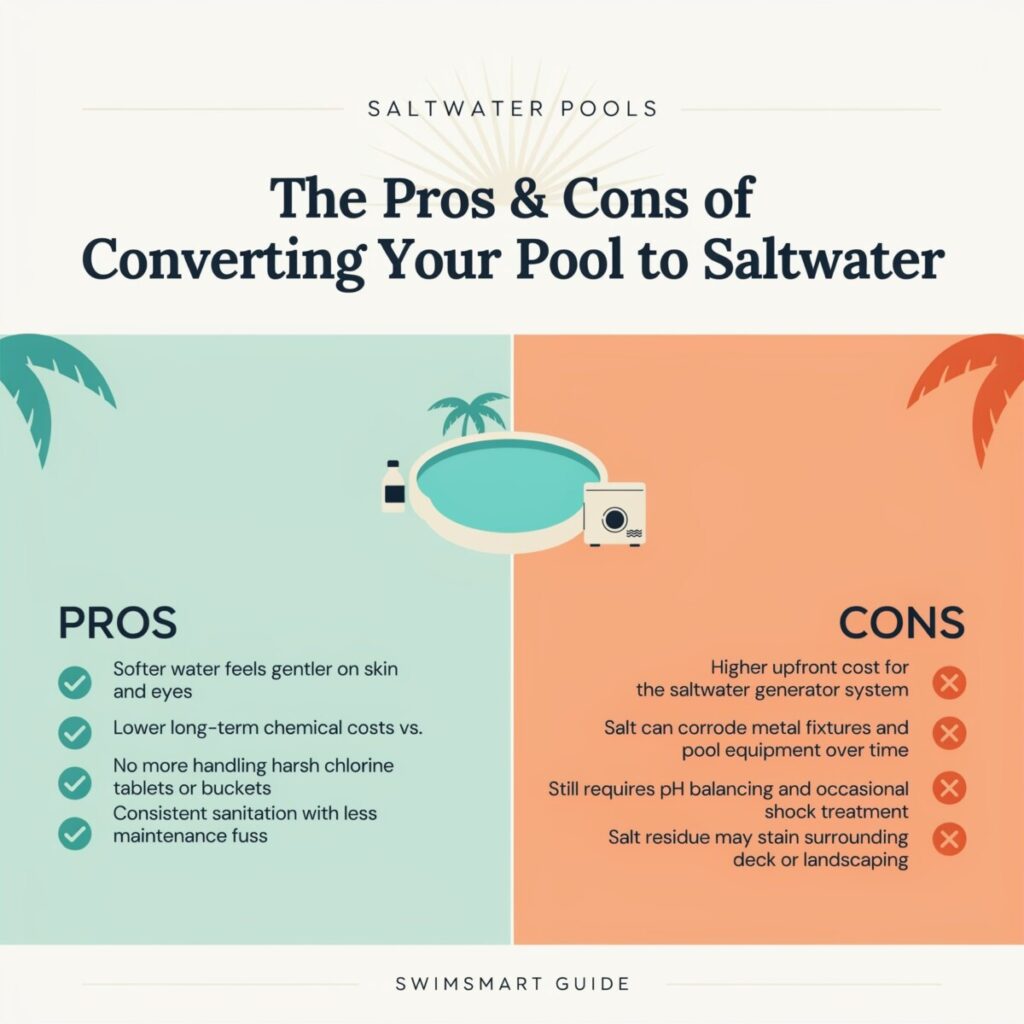
The most immediate benefit you will notice is the feel of the water. Because the salinity matches your body’s natural moisture levels, the water feels “soft” and silky. Swimmers rarely experience the red eyes, dry skin, and bleached swimsuits associated with traditional chlorine pools.
2. Goodbye, “Pool Smell”
That strong, stinging chemical smell at a pool isn’t actually chlorine; it’s chloramines. Chloramines form when traditional chlorine binds with sweat, oils, and other organic matter. Because salt systems produce a steady, continuous stream of pure chlorine, chloramines are burned off much faster. The result is a pool area that smells fresh and clean, rather than like a municipal recreation center.
3. Consistent Sanitation and Convenience
With a traditional pool, chlorine levels spike immediately after you add tablets or liquid, and then steadily drop throughout the week as the sun and swimmers deplete it. A salt chlorine generator provides a slow, continuous drip of sanitizer. This means your pool stays consistently clear and safe, eliminating the “rollercoaster” of chemical levels.
4. Lower Ongoing Chemical Costs
While the initial setup is expensive, the day-to-day running costs are generally lower. Pool-grade salt is incredibly cheap compared to liquid chlorine or trichlor tablets. Depending on your local chemical prices and pool size, many homeowners save between $100 and $300 annually on sanitizing chemicals alone.
5. Safety and Storage
Handling concentrated liquid chlorine or chlorine tablets poses real safety risks, including chemical burns and the danger of storing hazardous materials in your garage. Salt, on the other hand, is benign, safe to store, and easy to handle, making it a much safer option for families with children or pets.
The Cons: Why Some Owners Stick to Traditional Chlorine
Despite the luxury factor, saltwater pools are not a magic bullet. They introduce new complexities and costs that every homeowner must consider.
1. High Upfront Conversion Costs
Converting to saltwater is not as simple as pouring salt into the skimmer. You must purchase a high-quality salt chlorine generator and pay for professional installation (or tackle a complex DIY plumbing and electrical job).
- Equipment Cost: $500 to $1,500+ for the unit.
- Installation: $300 to $1,000+ depending on your existing plumbing.
Total conversion costs typically range from $1,000 to $3,500.
2. The Inevitable Cell Replacement
The salt cell is a consumable item. The titanium plates inside degrade over time. Depending on how well you maintain your water chemistry and how heavily you use the pool, a replacement cell will cost between $200 and $800 and will need to be swapped out every 3 to 7 years.
3. The Threat of Corrosion
Salt is inherently corrosive. While modern pool equipment is built to handle it, saltwater can wreak havoc on:
- Metal fixtures: Handrails, ladders, and light rings not made of marine-grade stainless steel or composite materials.
- Heaters: Copper heat exchangers can degrade rapidly if water chemistry is off.
- Hardscaping: If saltwater splashes onto natural stone coping, flagstone, or certain concrete decks and is allowed to dry, it will cause spalling, etching, and deterioration over time.
4. pH Drift and Water Chemistry Complexity
Saltwater pools are not “set it and forget it.” The electrolysis process naturally drives the pH level of your pool water upward. Salt pool owners must frequently test their water and add Muriatic Acid to keep the pH in check. Furthermore, if your calcium hardness is too high, the salt cell will rapidly scale over with calcium deposits, shutting down the system and requiring manual cleaning.
5. Local Regulations and Drainage Issues
You cannot simply backwash or drain a saltwater pool into the street, a storm drain, or a neighbor’s yard. High salinity can kill local vegetation and contaminate municipal water treatment systems. Many US municipalities and Homeowner Associations (HOAs) have strict regulations regarding saltwater discharge. Always check local codes before converting.
Costs: Detailed Breakdown and ROI Scenarios
To understand the true financial impact, let’s look at the costs associated with converting and maintaining a saltwater pool.
| Cost Factor | Estimated Range (USD) | Frequency |
|---|---|---|
| Salt Chlorine Generator (Unit) | $500 – $1,500 | One-time (Initial) |
| Professional Installation | $300 – $1,000 | One-time (Initial) |
| Initial Pool-Grade Salt | $50 – $150 | One-time (Initial) |
| Replacement Salt Cell | $200 – $800 | Every 3–7 Years |
| Muriatic Acid (for pH control) | $50 – $100 | Annually |
| Traditional Chlorine (Comparison) | $300 – $600+ | Annually |
Scenario A: The Small Backyard Pool (15,000 Gallons)
- Upfront Cost: ~$1,200 (Mid-range unit + basic install + salt).
- Annual Savings: You might save $150 a year on chlorine, but spend $50 on extra acid. Net savings: $100/year.
- The Reality: At this size, the financial payback takes over a decade. The conversion here is purely for comfort and convenience, not financial ROI.
Scenario B: The Large Family Pool (30,000 Gallons)
- Upfront Cost: ~$2,200 (High-capacity unit + install + salt).
- Annual Savings: Large pools consume massive amounts of chlorine. You could save $400+ annually on sanitizers.
- The Reality: The system pays for itself in roughly 5 to 6 years. When you factor in the time saved not hauling heavy chlorine jugs from the pool store, the ROI becomes highly attractive.
Maintenance Realities and Best Practices
Owning a saltwater pool shifts your maintenance workload; it doesn’t eliminate it. Here is what your new routine will look like.
Weekly/Bi-Weekly Testing: You still need to test your water. You must monitor Free Chlorine, pH, Total Alkalinity, Calcium Hardness, and Cyanuric Acid (Stabilizer). Because the pH naturally rises, you will likely be adding small doses of acid weekly.
Cell Inspection and Cleaning: Every 30 to 90 days, you must turn off the system, remove the salt cell, and look inside. If you see white, crusty calcium buildup on the plates, you must soak the cell in a mild acid/water solution to dissolve it. If you ignore this, the cell cannot generate chlorine and will burn out prematurely.
Winterizing: If you live in a climate that experiences freezing temperatures (e.g., the Midwest or Northeast), you must properly winterize the system. This usually involves removing the salt cell and flow switch, storing them indoors, and capping the plumbing to prevent water from freezing inside the delicate electronics.
Fighting Corrosion: To protect your investment, install a sacrificial zinc anode in your plumbing line. This cheap piece of metal will corrode instead of your expensive pool heater and ladders. Additionally, keep a garden hose handy to rinse off your pool deck and coping whenever saltwater splashes out of the pool.
Health, Safety, and Water Quality
From a health perspective, saltwater pools are generally superior for the bather. The reduction in chloramines means fewer respiratory irritants, which is highly beneficial for children, the elderly, or anyone with asthma or sensitive skin.
However, from a sanitation standpoint, the water is identical to a traditional pool. It is still chlorinated water. This means it is perfectly safe, effectively kills pathogens, and meets all US health codes for recreational water.
A Note on Safety: The salt chlorine generator uses electricity to split molecules. It is vital that your pool equipment is properly bonded and grounded by a licensed electrician. Furthermore, while the salt level is low, the water can still be harmful to pets if they drink large quantities of it, and it will kill grass and delicate plants if backwashed directly into your landscaping.
Aesthetics, Equipment, and Home Resale Value
Aesthetics: Saltwater pools tend to stay clearer and sparkle more consistently than manually chlorinated pools because the sanitizer levels never drop to zero between maintenance days.
Equipment Wear: As mentioned, salt is tough on metal. If you are converting, take inventory of your current hardware. If you have standard steel ladders or older metal light niches, budget to replace them with composite or marine-grade alternatives.
Resale Value: In the US real estate market, a saltwater pool is generally viewed as a premium upgrade. Most homebuyers in the 30–65 demographic recognize the benefits of saltwater and view it as a modern, desirable feature. While it won’t necessarily add tens of thousands to your home’s appraised value, it makes your property more attractive and competitive compared to homes with aging, traditional chlorine setups.
The Final Verdict: Should You Convert?
Deciding to convert to saltwater comes down to balancing your budget against your desire for a premium swimming experience.
You SHOULD convert if:
- You hate the smell of chlorine and dealing with red eyes/itchy skin.
- You have a medium-to-large pool where chemical savings will offset the equipment cost.
- You travel frequently and need a system that keeps the pool sanitized automatically while you are away.
- You are tired of storing dangerous chemicals in your garage.
You SHOULD NOT convert if:
- You are on a strict budget and cannot absorb a $1,500+ upfront cost.
- Your pool features expensive natural stone coping that is prone to salt deterioration.
- You live in an area with strict HOA or municipal bans on saltwater drainage.
- You don’t mind the weekly routine of manually testing and dosing traditional chlorine.
Ultimately, a saltwater pool is a luxury upgrade. It won’t save you from doing pool maintenance, but it will make the time you spend in the pool vastly more enjoyable. Get three quotes from licensed local pool professionals, check your local drainage codes, and get ready for the softest swim of your life.