
You step out to enjoy your pool on a sunny afternoon and notice something alarming — rusty brown streaks creeping across the deep end, a ghostly blue-green shadow near the skimmer, or stubborn dark spots scattered across the floor. If you have a vinyl-lined pool, these are metal stains, and they can feel impossible to erase. The good news? Most metal stains are fully removable without draining your pool or replacing the liner.
In this guide, you’ll learn exactly how to remove metal stains from your swimming pool liner using safe, homeowner-friendly methods. We’ll walk you through identifying which metal is causing the discoloration, choosing the right pool stain remover, and applying treatments step-by-step. You’ll also get product recommendations, filtration and aftercare tips, and a full prevention plan so the stains don’t come back next season. Whether your pool is above-ground or inground, the techniques below work for any vinyl liner.
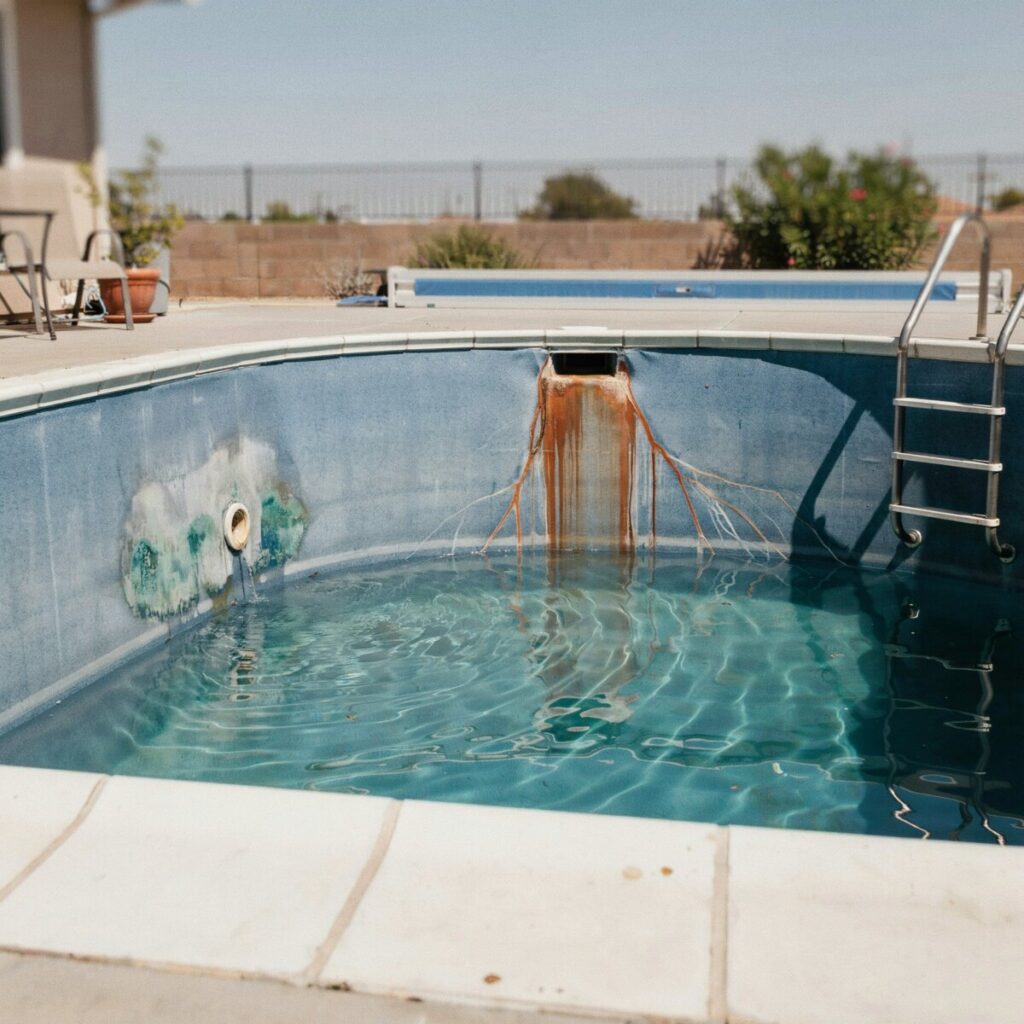
Why Metal Stains Form on Vinyl Pool Liners
Metal stains in swimming pools are far more common than most homeowners realize. Unlike algae (which grows) or organic stains (which sit on the surface), metal stains are the result of dissolved metals oxidizing in your water and settling onto the vinyl liner as colored deposits.
The most common metals in pool water
| Metal | Typical Stain Color | Common Source |
|---|---|---|
| Iron | Brown, rust, orange | Well water, corroded pipes or heaters |
| Copper | Blue, green, teal | Algaecides, ionizers, corroded heat exchangers |
| Manganese | Black, purple, dark brown | Well water, some municipal supplies |
Where do these metals come from?
- Source water: Well water and some municipal supplies contain naturally high levels of iron, copper, or manganese. Topping off your pool with a garden hose is the #1 way metals enter the water.
- Corroding equipment: Aging pool heaters, copper heat exchangers, metal ladders, and low-pH water eating into plumbing can all release copper and iron.
- Pool chemicals: Copper-based algaecides and certain mineral sanitizers add metals directly to your water.
- Fertilizer runoff: Lawn fertilizers high in iron can wash into the pool during heavy rain.
- Low pH water: Acidic water (pH below 7.2) becomes corrosive and dissolves metals from equipment, which then precipitate onto your liner.
How the staining actually happens
When metals are dissolved in water, they’re invisible. But once they oxidize — usually triggered by chlorine, a pH change, or a shock treatment — they turn into solid particles. These particles settle on the vinyl liner and bond to the surface, creating the colored stains you see. The longer the stain sits, the deeper it penetrates the vinyl, which is why early treatment matters.
Note: Metal stains behave differently from algae or organic stains. Algae brushes off and regrows; organic stains often respond to chlorine. Metal stains typically don’t respond to standard shocking, which is how many homeowners first realize they’re dealing with metals.
How to Identify Metal Stains vs. Algae or Organic Stains
Before you buy a pool stain remover, you need to confirm the stain is actually caused by metals. Misidentifying the stain wastes time, money, and chemicals.
Visual clues by metal type
- Iron stains: Rusty brown, orange, or reddish. Often concentrated near return jets, ladders, or where well water enters.
- Copper stains: Blue, teal, or green. May look like algae but won’t brush off. Common around heaters and in pools using copper algaecides.
- Manganese stains: Black, deep purple, or dark brown. Less common but very stubborn.
Simple at-home tests
- The Vitamin C (ascorbic acid) test — best quick method:
Crush a Vitamin C tablet, put the powder in a white sock or cloth, and press it directly against the stain for 30–60 seconds. If the stain lightens or disappears, it’s a metal stain (ascorbic acid reduces oxidized metals back to a soluble form). - The chlorine test:
Dip a white cloth in liquid chlorine and press it on the stain. If the stain fades, it’s more likely organic or algae. If nothing happens, it’s probably metal. - The magnet test (iron only):
Place a strong magnet in a plastic bag and move it near the stain. If dark particles move, you have iron.
When to formally test your water
If you confirm a metal stain, test the bulk pool water with a pool water metal test kit (available at most pool supply stores). Many pool stores also test for metals free of charge. Knowing which metals are present — and at what concentration — will guide your treatment plan.
Safety First: What to Do Before You Treat Stains
Before you begin any treatment, take a few minutes to protect yourself, your pool, and your equipment.
Personal protective equipment (PPE)
- Chemical-resistant gloves (nitrile or neoprene)
- Safety goggles or glasses
- Closed-toe shoes
- Long sleeves and pants when handling concentrated chemicals
Prep your pool chemistry and access
- Stop shocking the pool at least 48 hours before treatment. High chlorine levels can neutralize ascorbic acid and some sequestrants.
- Test and balance pH to between 7.2 and 7.6. Metals are more soluble and easier to remove at slightly lower pH, but dropping below 7.0 risks damaging your liner and equipment.
- Lower free chlorine to 1 ppm or below. Chlorine and ascorbic acid neutralize each other — you’ll burn through both and accomplish nothing.
- Restrict access: Keep children, pets, and swimmers out of the pool during all treatment phases.
- Read every product label before opening. Follow the manufacturer’s dosing and safety instructions — pool chemical safety is not optional.
A note on draining
Some homeowners consider a full drain to scrub the liner. Don’t drain a vinyl-liner pool completely unless a professional is involved. Empty vinyl liners can shrink, wrinkle, or float out of place. Hydrostatic pressure can even crack the pool shell. If you must drain, a partial drain to below the stain line is the limit — and only if your pool was designed for it.
Best Treatments for Metal Stains: Sequestrants, Ascorbic Acid & Removers
Below are the five proven methods for removing metal stains from a pool liner, ordered from least to most invasive. Start with Method A and escalate only if needed.
Method A: Metal Sequestrants (Best First-Line Treatment)
A metal sequestrant for pools (also called a chelator or metal remover) is a chemical that binds to dissolved metals, keeping them in solution so they can’t stain your liner. Many sequestrants also pull existing light-to-moderate stains back into the water.
How to use a sequestrant step-by-step
- Balance water chemistry. pH 7.2–7.6, chlorine below 1 ppm.
- Calculate the dose. Most liquid sequestrants dose at 1 quart per 10,000 gallons for initial treatment. Check the label.
- Apply around the pool perimeter. Pour the sequestrant evenly around the edges while the pump is running.
- Run the pump continuously for 24–48 hours. Good circulation is essential.
- Brush the stained areas gently with a soft vinyl-safe brush after 12 hours. You’ll often see the stains lift as the sequestrant works.
- Vacuum and backwash (see filtration section below).
- Re-dose at the maintenance rate (usually 2–4 oz per 10,000 gallons) weekly for a month, then monthly.
Expected result: Light-to-moderate stains fade in 24–72 hours. Heavy, old stains may need a second treatment or a follow-up method.
Time required: 2–3 days of active monitoring, 30 minutes of actual work.
Method B: Ascorbic Acid (Vitamin C) Treatment
This is the most popular vitamin C pool stain removal method. Ascorbic acid is a mild acid that chemically reduces oxidized metals back into a clear, soluble form. It’s safe for vinyl liners and works fast — often in minutes.
Spot treatment (best for vinyl liners)
- Dissolve 1–2 cups of ascorbic acid powder in warm water in a bucket.
- Dip a white cloth or sponge into the solution.
- Press and gently rub the stain for 30–60 seconds. The stain should fade dramatically or vanish.
- Rinse the treated area with fresh pool water.
- Immediately add a metal sequestrant to the whole pool — the freed metals are now in solution and will re-stain if not captured.
Whole-pool treatment (for widespread staining)
- Lower chlorine to 0 ppm and pH to 7.0–7.2.
- Add 1 pound of ascorbic acid per 10,000 gallons, broadcast evenly.
- Run the pump on high circulation for 30–60 minutes. Stains should fade quickly.
- Wait 24 hours, then add a full dose of metal sequestrant to lock the metals in solution.
- Bring pH back to 7.2–7.6 and restore chlorine gradually.
Pros: Very effective, fast, safe for vinyl.
Cons: Results can be temporary without a sequestrant follow-up; ascorbic acid temporarily lowers pH and consumes chlorine.
Method C: Commercial Vinyl Stain Removers and Stain Erasers
Several manufacturers sell products specifically formulated as the best product to remove pool stains from vinyl liners. These are typically mild acidic blends with surfactants.
- Apply directly to the stain per label instructions.
- Always test a small hidden patch first — some vinyl liners can discolor if exposed to strong acids.
- Use a non-abrasive sponge or magic-eraser-style pad designed for pool liners. Never use steel wool, pumice, or scouring pads on vinyl.
- Rinse promptly and follow with a sequestrant.
Time required: 15–30 minutes per stain area.
Method D: Diluted Muriatic Acid (Use With Caution)
Strong acids like full-strength muriatic acid can damage a vinyl liner — causing fading, pitting, or weakening. Use this method only when other options have failed, and only with heavy dilution.
- Dilution ratio: 1 part muriatic acid to 10 parts water (always add acid to water, never water to acid).
- Apply with a sponge directly to the stain for no more than 30 seconds.
- Neutralize immediately by brushing the area and allowing pool water to dilute it.
- Rinse thoroughly and rebalance pool pH afterward.
⚠️ Safety warning: Muriatic acid fumes are hazardous. Wear goggles, gloves, and work in a well-ventilated area. Never mix acid with chlorine — this produces toxic gas.
Method E: Partial Drain and Manual Cleaning (Last Resort)
If stains are extensive and have been present for years, you may consider draining the pool to fix the stain risks and all. Partially drain the water below the stain line, then clean the exposed liner with a vinyl-safe cleaner and a soft brush.
- Never fully drain a vinyl liner pool — the liner can shrink or shift permanently.
- Consult a professional before attempting a drain.
- For severely damaged or aged liners, pool liner replacement cost typically ranges from $2,500 to $5,000+ depending on pool size, and may be more cost-effective than repeated treatments.
Aftercare: Filters, Vacuuming, and Circulation
After you’ve treated the stains, your filtration system will be working hard to capture the freed metals.
Filtration and cartridge care after metal treatment
- Run the pump for at least 24–48 hours after treatment to keep metals in suspension.
- Backwash sand or DE filters thoroughly once you see stains lift. Metals get trapped in filter media and can redeposit if not flushed out.
- Clean or replace cartridge filters if they appear discolored. Cartridges trap metals aggressively and may need replacement after a heavy treatment.
- Check the pump basket and skimmer baskets for visible metal debris and rinse them.
- Vacuum to waste (if your system allows it) rather than filtering. This sends the metal-laden water directly out of the pool instead of cycling it back through your filter.
Avoiding re-deposition
Keep pH in the ideal range (7.2–7.6) during the days following treatment. If pH rises too high, metals can precipitate out of solution and re-stain. A steady dose of sequestrant is your best defense.
How to Prevent Metal Stains in the Future
Once you’ve gone through the effort of treating stains, you’ll want to keep them from returning. Good pool stain prevention is mostly about managing your water source and chemistry.
Test and treat your source water
- If you fill from a well, have the water tested for iron, copper, and manganese. Installing a whole-house iron filter or a hose-mounted pre-filter can eliminate the problem at the source.
- When topping off with a garden hose, let it run for 2–3 minutes first to flush metals from household plumbing.
Maintain balanced water chemistry
- pH: 7.2–7.6
- Total alkalinity: 80–120 ppm
- Free chlorine: 1–3 ppm
- Cyanuric acid (stabilizer): 30–50 ppm
Low pH is the most common cause of metal corrosion in equipment, which leads to copper and iron entering the water.
Use sequestrants proactively
- Add a maintenance dose of metal sequestrant for pools once a month, especially if you have well water.
- Re-dose after heavy rains, big fill-ups, or equipment repairs.
Equipment and landscaping
- Replace old copper heat exchangers and corroded metal pool accessories.
- Avoid copper-based algaecides if your pool already has staining history — use polymer or quat-based alternatives.
- Keep lawn fertilizer away from the pool deck; iron-rich fertilizer runoff is a common staining culprit.
Seasonal maintenance
During pool winterization, add a final dose of sequestrant before closing. Metals tend to oxidize during the dormant winter months, and you may open the pool to fresh stains without this step.
When to Hire a Pool Pro
Sometimes, DIY treatment hits a wall. Call a professional pool service if:
- Stains persist after two full rounds of ascorbic acid and sequestrant treatment.
- The vinyl liner shows signs of cracking, fading, or delamination — these may require pool liner replacement.
- Your source water tests very high in metals (>0.5 ppm) and you need help designing a filtration solution.
- You’re uncomfortable handling chemicals like muriatic acid or managing drain-downs.
Professional pool stain specialists can perform aggressive chemical treatments, partial drain-and-clean procedures, and liner inspections safely. Most offer free estimates, and the cost is often less than a DIY project that goes wrong.
Quick Reference Checklist
- ✅ Identify the stain (Vitamin C test, chlorine test, or magnet test)
- ✅ Test pool water for metals and source water
- ✅ Balance pH to 7.2–7.6, drop chlorine below 1 ppm
- ✅ Try a metal sequestrant first (safest, longest-lasting)
- ✅ Spot-treat with ascorbic acid for stubborn marks
- ✅ Run filter 24–48 hours, then backwash or replace cartridges
- ✅ Vacuum to waste when possible
- ✅ Maintain monthly sequestrant doses, test source water
- ✅ Call a pro if stains won’t lift or liner shows damage
Closing
Metal stains on a pool liner are frustrating, but they’re almost always fixable with the right approach. Start with a metal sequestrant, use ascorbic acid for spot treatments, and keep your chemistry balanced — your vinyl liner will look like new again. If you have questions about identifying your stain or choosing the right product, leave a comment below or reach out to your local pool supply store. Stay safe, test often, and enjoy your clean, stain-free pool all summer long.