
When you’re dreaming about your perfect backyard oasis, the pool shape is one of the most important decisions you’ll make—yet many homeowners overlook it. The right pool design affects everything from how you use the space to how much maintenance you’ll handle, your home’s aesthetic appeal, and even your long-term costs. Whether you’re planning a new pool installation or considering a pool renovation, understanding the differences between geometric and freeform pools can help you make the best choice for your lifestyle, property, and budget.
In the US, geometric and freeform pools are the two most popular inground pool shapes, each offering distinct advantages depending on your backyard pool design goals. Let’s dive into what makes each style unique and how to choose the right one for your home.
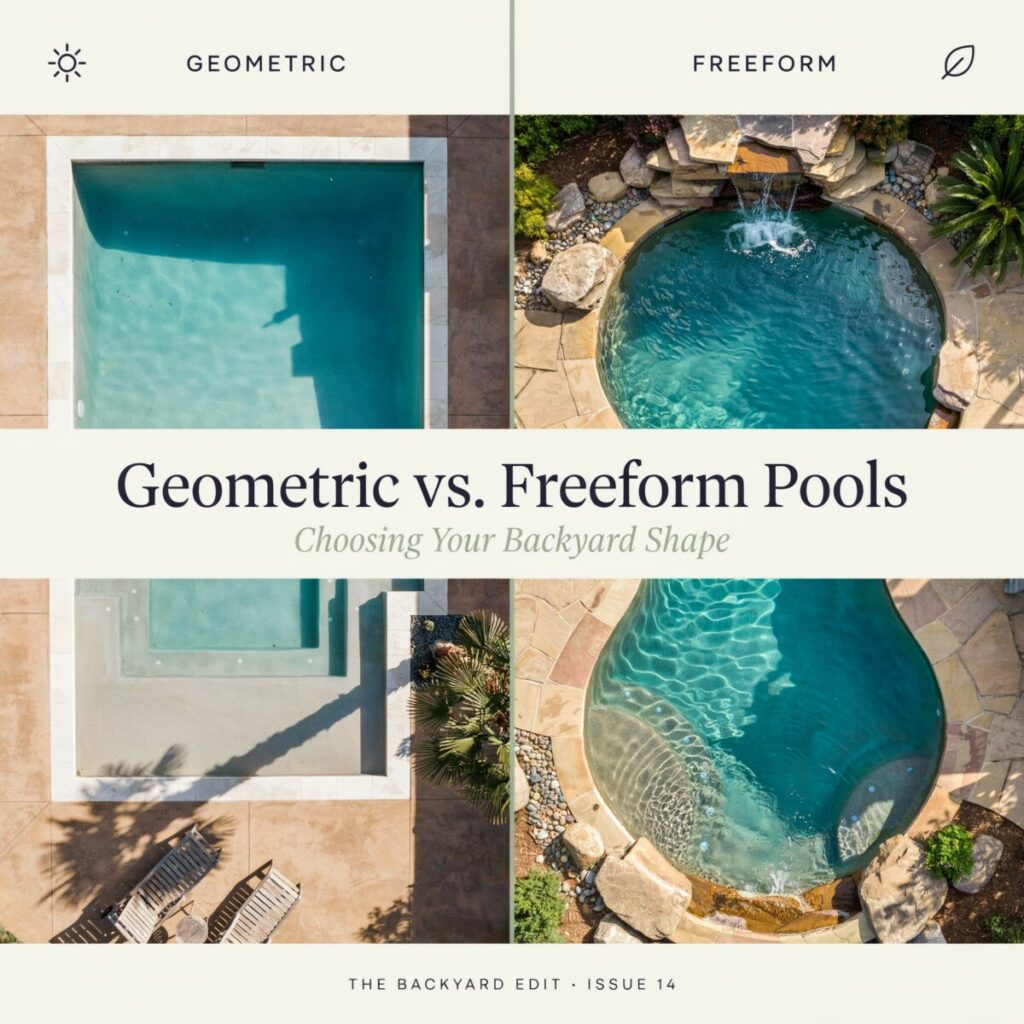
What Is a Geometric Pool?
Geometric pools are defined by their clean lines, sharp angles, and structured shapes. Think rectangles, squares, L-shapes, and other symmetrical or angular designs. These swimming pool shapes are rooted in classical architecture and have become synonymous with modern pool design and contemporary luxury backyard pools.
Geometric pools, particularly rectangular pools, are often chosen for:
- Contemporary and minimalist homes
- Formal outdoor living spaces
- Lap swimming and fitness
- Clean, architectural aesthetics
- Maximizing space efficiency in rectangular lots
The straight edges and defined corners of geometric pools create a polished, intentional look that complements modern architecture and structured backyard landscaping. They’re particularly popular among homeowners who value functionality and clean design principles.
What Is a Freeform Pool?
Freeform pools embrace organic, flowing curves that mimic natural water features. These kidney-shaped pools, lagoons, and curved designs create a softer, more relaxed atmosphere that feels like a natural extension of the landscape.
Freeform pools are characterized by:
- Curved, irregular edges
- Organic, flowing shapes
- Resort-style or tropical aesthetics
- Integration with natural elements like rocks, plants, and waterfalls
This natural pool design approach is perfect for homeowners who want their pool to blend seamlessly with backyard landscaping, creating a vacation-inspired retreat right at home. Freeform pools work beautifully in properties with mature trees, rock gardens, or other natural features.
Geometric vs. Freeform Pools: Key Differences
Understanding the fundamental differences between these two pool styles can help you make an informed decision. Here’s a comprehensive comparison:
| Factor | Geometric Pools | Freeform Pools |
|---|---|---|
| Visual Style | Clean, structured, modern | Organic, natural, relaxed |
| Space Efficiency | Excellent for rectangular lots | Better for irregular lots |
| Landscaping Compatibility | Works with formal, structured designs | Blends with natural, flowing landscapes |
| Swimming Functionality | Ideal for lap swimming and games | Better for leisurely swimming and play |
| Maintenance | Generally easier to clean | May require more attention to curves |
| Cleaning Ease | Straight edges simplify cleaning | Curves can trap debris in corners |
| Pool Cover Compatibility | Standard covers fit easily | May need custom covers |
| Installation Complexity | Straightforward excavation | More complex, custom excavation |
| Cost Factors | Often more predictable pricing | Custom curves can increase costs |
| Design Flexibility | Limited to angular shapes | Highly customizable organic forms |
Visual Style and Aesthetics
Geometric pools project sophistication and intentionality. Their straight lines create a contemporary pool design that appeals to modern sensibilities and complements architectural elements like angular patios, geometric pool deck design, and structured outdoor kitchens.
Freeform pools, conversely, evoke a sense of natural beauty and relaxation. They’re the go-to choice for creating that resort-style backyard feel, especially when paired with waterfalls, rock features, and tropical landscaping.
Space and Lot Considerations
Geometric pools excel in rectangular or narrow lots where you want to maximize usable swimming area. Their defined shape allows for efficient use of space and easier integration with existing structures like your home’s foundation or retaining walls.
Freeform pools can transform awkward, irregular lot shapes into custom pool design masterpieces. The flowing curves can work around existing trees, rock outcroppings, or slope changes that would make a geometric pool difficult to install.
Which Pool Shape Works Best for Your Backyard?
Your specific property and lifestyle needs should drive your pool shape decision. Consider these common scenarios:
Small Backyard
For small backyard pool installations, geometric pools—especially rectangular or square designs—often work better. Their clean lines maximize usable swimming space and create a sense of order in compact areas. A rectangular pool can fit snugly against your home’s exterior, leaving room for essential pool deck design elements without overwhelming the space.
Large Backyard
Large properties give you flexibility to choose either style. Freeform pools can really shine in expansive yards, creating dramatic lagoon-like features with multiple seating areas, beach entries, and integrated spa zones. However, geometric pools in large spaces can also create stunning infinity-edge designs or Olympic-style lap pools.
Modern Home
Contemporary and minimalist homes pair beautifully with geometric pools. The clean lines of a rectangular or square pool complement modern architecture, creating a cohesive design language throughout your outdoor living space.
Traditional Home
Traditional homes can work with either style depending on your landscaping approach. A geometric pool with classic coping and formal landscaping creates an elegant, timeless look. Alternatively, a freeform pool surrounded by established gardens can create a charming, established feel.
Family-Friendly Outdoor Space
Both styles work well for families, but freeform pools often provide more natural play areas with gradual entries and curved seating ledges. Geometric pools, however, offer clear boundaries and defined areas for games and activities.
Fitness-Focused Swimmers
If lap swimming is a priority, geometric pools—specifically rectangular designs—are unmatched. Their straight sides allow for consistent stroke patterns without turning disruptions, making them ideal for serious swimmers and fitness enthusiasts.
Resort-Style or Tropical Backyard
Freeform pools dominate resort-style designs. Their organic shapes, combined with waterfalls, rock formations, and tropical plants, create that vacation-inspired backyard atmosphere many homeowners crave.
Irregular Lot Shapes
Awkward lot shapes, slopes, or existing obstacles often favor freeform pools. A skilled pool contractor can design curves that work around challenging features, turning potential problems into custom design opportunities.
Geometric Pool Benefits
Geometric pools offer several compelling advantages that make them popular among US homeowners:
Sleek, Modern Appearance
The clean lines and structured shapes of geometric pools create a contemporary aesthetic that never goes out of style. This modern pool design approach appeals to homeowners who appreciate architectural intentionality and minimalist elegance.
Better Use of Rectangular or Narrow Lots
If you have a rectangular backyard or narrow property, geometric pools maximize your swimming area. Their straight sides align perfectly with property boundaries, allowing you to fit a substantial pool without awkward dead spaces.
Easier Integration with Outdoor Living Features
Geometric pools integrate seamlessly with structured pool deck design, outdoor kitchens, pergolas, and covered entertaining areas. The straight lines create natural zones for different activities without visual clutter.
Ideal for Lap Swimming
Rectangular pools are the gold standard for lap swimming. Their consistent width and straight sides allow swimmers to maintain rhythm without constant turning, making them perfect for fitness routines and competitive training.
Simplified Maintenance and Cover Options
Straight edges mean easier cleaning and standard-sized pool covers. Robotic pool cleaners navigate geometric pools more efficiently, and you can find off-the-shelf covers that fit perfectly without custom fabrication.
Strong Resale Appeal
In modern real estate markets, geometric pools often have broad appeal. Their timeless design works with various home styles, making them a safer investment for homeowners thinking about future resale value.
Freeform Pool Benefits
Freeform pools bring unique advantages that appeal to homeowners seeking a natural, relaxed backyard experience:
Natural, Relaxed Appearance
Freeform pools create an organic, flowing aesthetic that feels like a natural water feature rather than a constructed pool. This natural pool design approach brings tranquility and softness to outdoor spaces.
Excellent Landscaping Integration
Curved pools blend beautifully with mature landscaping, rock gardens, and natural features. They can wrap around existing trees, incorporate boulders into their design, and create seamless transitions between water and land.
Resort-Style Backyard Creation
If you’re dreaming of a vacation-inspired backyard, freeform pools deliver. Their organic shapes work perfectly with waterfalls, grottos, beach entries, and other luxury features that create that resort-style backyard atmosphere.
Softer, Less Formal Look
For homeowners who find geometric designs too rigid or formal, freeform pools offer a softer alternative. The flowing curves create a welcoming, approachable feel that invites relaxation and casual enjoyment.
Custom Solutions for Awkward Yards
Irregular lot shapes, slope changes, and existing obstacles can become design opportunities with freeform pools. A creative pool contractor can use curves to work around challenges that would make geometric pool installation difficult or impossible.
Geometric vs. Freeform Pool Costs
Pool installation cost varies significantly based on shape, materials, excavation complexity, and custom features. While pricing depends heavily on your location, pool contractor, and specific design choices, here are some general cost considerations:
Geometric Pool Cost Factors
- Excavation is typically straightforward, reducing labor costs
- Standard sizes (rectangular, square) may have more predictable pricing
- Concrete and gunite applications follow consistent patterns
- Pool cover and accessory costs are often lower due to standard sizes
- Overall costs tend to be more predictable and budget-friendly
Freeform Pool Cost Factors
- Custom excavation requires more time and skilled labor
- Complex curves increase concrete or gunite application time
- Custom pool covers and accessories cost more
- Additional landscaping integration may increase overall project scope
- Unique shapes can lead to less predictable pricing
On average, freeform pools can cost 10-20% more than comparable geometric pools due to the additional labor and customization required. However, this varies widely based on your specific design, local labor rates, and pool contractor pricing.
Remember to factor in long-term pool maintenance costs. Geometric pools often have lower ongoing maintenance expenses due to easier cleaning and standard replacement parts. Pool renovation costs may also differ, as geometric pools typically have more straightforward repair and resurfacing processes.
Pool Shape and Maintenance
Your pool’s shape significantly impacts daily upkeep, cleaning efficiency, and water circulation patterns.
Geometric Pool Maintenance Advantages
- Robotic and automatic pool cleaners navigate straight edges efficiently
- Debris tends to collect in predictable patterns, making manual cleaning easier
- Standard pool covers fit perfectly, reducing water evaporation and chemical loss
- Water circulation systems can be designed with predictable flow patterns
- Pool renovation and resurfacing follow established patterns
Freeform Pool Maintenance Considerations
- Curved edges and coves can trap debris, requiring more frequent attention
- Custom pool covers are often necessary, increasing initial and replacement costs
- Water circulation may require more strategic return jet placement
- Cleaning equipment may need more frequent repositioning
- Pool renovation work on curved surfaces requires more skilled labor
Both pool styles require regular maintenance including chemical balancing, filtration system care, and periodic deep cleaning. However, geometric pools generally offer more predictable maintenance routines and lower long-term costs for cleaning supplies and equipment.
Best Pool Shape by Home Style
Your home’s architectural style should influence your pool shape decision to create a cohesive outdoor living space:
Modern and Contemporary Homes
Geometric pools are the clear winner. Rectangular pools with clean coping, minimalist pool deck design, and integrated LED lighting complement contemporary architecture perfectly.
Mediterranean and Traditional Homes
Both styles can work depending on your landscaping approach. Freeform pools with terra cotta coping and Mediterranean plantings create a romantic, European feel. Geometric pools with classical details offer timeless elegance.
Rustic or Natural Homes
Freeform pools excel in natural settings. Their organic shapes blend seamlessly with rustic landscaping, stone features, and natural materials that complement rustic architecture.
Luxury Custom Estates
Both pool types can work for luxury homes, depending on your design vision. Many high-end properties feature multiple pools—perhaps a geometric lap pool for fitness and a freeform leisure pool for entertaining.
Minimalist Homes
Geometric pools align perfectly with minimalist design principles. Their clean lines, simple shapes, and lack of ornamental features embody minimalist aesthetics.
Questions to Ask Before Choosing
Before committing to a pool shape, consider these important questions:
How Do I Want to Use the Pool?
Are you primarily interested in fitness and lap swimming, or do you want a leisure space for entertaining and relaxation? Your intended use should heavily influence your shape choice.
Do I Want a Sleek or Natural Look?
Consider your overall aesthetic preferences. Do you prefer clean, modern lines or organic, flowing designs? Your pool should complement your personal style and home architecture.
Is My Yard Narrow, Open, or Irregular?
Your lot shape matters significantly. Narrow, rectangular yards often work better with geometric pools, while irregular lots may favor freeform designs.
How Much Landscaping Do I Want Around the Pool?
If you’re planning extensive backyard landscaping with trees, gardens, and natural features, a freeform pool may integrate more naturally. Geometric pools work better with structured, formal landscaping.
Do I Want Easier Maintenance or a More Custom Feel?
Be honest about your maintenance preferences. If you want minimal upkeep, geometric pools offer advantages. If you value unique, custom design, freeform pools provide more creative freedom.
Will I Need a Pool Cover, Spa, Tanning Ledge, or Water Features?
Consider all the features you want. Geometric pools accommodate standard covers and accessories more easily, while freeform pools may require custom solutions for additional features.
Final Verdict: Which One Is Better?
There’s no universal winner in the geometric vs. freeform pools debate. The best choice depends entirely on your specific situation, preferences, and property characteristics.
Choose a Geometric Pool If:
- You value structure, clean lines, and modern design
- Your lot is rectangular or narrow
- You want easier maintenance and standard accessories
- Lap swimming and fitness are priorities
- You prefer predictable costs and straightforward pool renovation
- Your home has contemporary or minimalist architecture
Choose a Freeform Pool If:
- You want a natural, relaxed, resort-style aesthetic
- Your lot is irregular or has challenging features
- Extensive landscaping is part of your vision
- You’re creating a vacation-inspired backyard retreat
- You value unique, custom design over standardization
- You want to soften your outdoor space with organic curves
Rule of Thumb: Geometric pools excel in functionality, maintenance ease, and modern aesthetics. Freeform pools shine in natural beauty, landscaping integration, and resort-style relaxation.
Ultimately, work with an experienced pool contractor who can evaluate your specific property, understand your lifestyle needs, and help you choose the pool shape that will bring you joy for years to come. Whether you choose geometric precision or freeform flow, the right pool shape will transform your backyard into the outdoor living space you’ve always wanted.
Frequently Asked Questions
Which pool shape is best for a small backyard?
For small backyard pool installations, geometric pools—particularly rectangular or square designs—typically work better. Their clean lines maximize usable swimming space and create efficient layouts that don’t overwhelm compact areas. A rectangular pool can fit snugly against your home while still leaving room for essential pool deck design elements.
Are geometric pools cheaper than freeform pools?
Generally, yes. Geometric pools often cost 10-20% less than comparable freeform pools due to straightforward excavation, standard sizing, and easier installation processes. However, costs vary significantly based on materials, custom features, local labor rates, and your specific pool contractor. Always get detailed quotes that include all aspects of pool installation cost.
Which pool style is easier to maintain?
Geometric pools are generally easier to maintain. Their straight edges allow robotic pool cleaners to work efficiently, debris collects in predictable patterns, and standard pool covers fit perfectly. Freeform pools require more attention to curved areas where debris can accumulate and often need custom covers and cleaning equipment.
Do freeform pools cost more to build?
Yes, freeform pools typically cost more to build than geometric pools. The custom excavation, complex curves, additional labor time, and need for custom accessories all contribute to higher pool installation costs. However, many homeowners find the unique aesthetic and resort-style backyard experience worth the investment.
Which pool shape adds more value to a home?
Both pool shapes can add value, but geometric pools often have broader appeal in modern real estate markets due to their timeless design and lower maintenance requirements. However, in areas where resort-style backyards are highly valued, a well-designed freeform pool can add significant value. The key is choosing a pool shape that complements your home’s architecture and appeals to your local buyer demographic.