
Owning a pool means owning chemicals — and owning chemicals means owning the responsibility that comes with them. Whether you’re maintaining a backyard oasis or managing a community pool for your HOA, the way you store your pool chemicals can be just as important as the way you use them. Poor storage leads to degraded chemicals, dangerous reactions, ruined property, and in the worst cases, serious injury.
But here’s the catch: storing pool chemicals safely in July is a different game than storing them in January. Summer heat can break down chlorine, pressurize sealed containers, and amplify the volatility of stored acids. Winter cold can freeze liquids, crack jugs, and introduce moisture through condensation that compromises dry chemicals. Each season throws its own curveballs, and being prepared for both is the mark of a responsible pool owner.
This guide walks you through everything you need to know about pool chemical storage year-round — from understanding what’s in those containers and why certain chemicals can never sit side by side, to building seasonal routines that keep your family safe, your chemicals effective, and your property intact. Let’s dive in.
Why Safe Storage Matters
You might think of pool chemicals as routine supplies — something you grab off the shelf every weekend. But many of these products are potent oxidizers, corrosive acids, or reactive compounds that demand respect.
Health and safety. Chlorine-based products release toxic gases when mixed with acids or ammonia. Muriatic acid can cause severe burns on contact with skin and permanent eye damage. Even brief inhalation of chemical dust or fumes in a poorly ventilated storage area can irritate your lungs and throat. Children and pets are especially vulnerable, making childproofing and access control essential parts of pool chemical safety.
Property damage. Chemicals stored improperly can eat through shelving, corrode metal tools, stain concrete floors, and even start fires. Calcium hypochlorite (common pool shock) is a powerful oxidizer that can ignite when it contacts organic materials like sawdust, rags, or spilled oil. One leaky container in a garden shed has caused entire structures to burn.
Chemical effectiveness. Heat, moisture, and sunlight degrade active ingredients. A bucket of chlorine tablets left in a hot, uninsulated shed for a few weeks may lose a significant percentage of its sanitizing power — meaning you end up using more product and spending more money to keep your pool clean.
Legal and liability concerns. For property managers and HOA board members, improper pool chemical storage can create regulatory violations under OSHA workplace safety standards or EPA hazardous materials guidelines. If a chemical-related incident occurs on a managed property, the liability exposure is substantial. Even private homeowners may face issues with insurance claims if negligence in chemical storage is determined to be a contributing factor.
The bottom line? Safe storage is not optional — it’s foundational.
Common Pool Chemicals and Their Hazards
Before you organize your storage area, you need to know what you’re working with. Here’s a quick rundown of the most common residential pool chemicals and the specific hazards each one presents.
Chlorine Tablets (Trichlor)
Trichloroisocyanuric acid tablets are the slow-dissolving pucks most pool owners drop into a floater or skimmer. They are strong oxidizers and must be stored away from acids, ammonia, and other chlorinating agents. Mixing trichlor with calcium hypochlorite or household bleach can produce an explosive reaction. Chlorine storage requires a cool, dry, well-ventilated space in the original, tightly sealed container.
Calcium Hypochlorite (Cal-Hypo / Pool Shock)
This granular shock treatment is one of the most reactive chemicals in a typical pool owner’s arsenal. Calcium hypochlorite storage demands strict separation from all organic materials, acids, fuels, and other oxidizers. It can self-heat under certain conditions and has been responsible for numerous shed and garage fires.
Muriatic Acid (Hydrochloric Acid)
Used to lower pH and clean pool surfaces, muriatic acid is highly corrosive. Muriatic acid storage must always be on a lower shelf or the floor — never above chlorine products. If acid leaks onto chlorine, it produces chlorine gas, which is extremely dangerous even in small concentrations. Store in the original container with the cap tightly secured, away from metals that it can corrode.
Dichlor (Sodium Dichloroisocyanurate)
This fast-dissolving chlorinating granule is often used for shocking and is more stable than cal-hypo, but it is still an oxidizer that requires separation from acids, fuels, and organic matter.
Algaecides
Most algaecides (quaternary ammonium compounds or copper-based formulas) are less reactive than chlorine products but should still be stored in original containers away from extreme temperatures. Some polymer-based algaecides can degrade or separate when frozen.
Cyanuric Acid (Stabilizer)
CYA is a relatively stable granular product, but it must be kept dry. Moisture exposure causes clumping and can make it difficult to dissolve when needed.
pH Increasers and Decreasers
Sodium carbonate (soda ash) and sodium bicarbonate (baking soda) are used to raise pH. Sodium bisulfate (dry acid) lowers pH and alkalinity. All should be stored in sealed containers to prevent moisture absorption, and dry acids must be kept well away from chlorine products.
Key takeaway: The single most important rule in pool chemical handling is segregation. Never store oxidizers (chlorine, shock) next to acids, fuels, or organic materials.
Year-Round Storage Principles
No matter the season, certain fundamentals apply to every pool chemical shed storage setup. Use these principles as the backbone of your storage strategy.
1. Choose the Right Location
Your storage area should be a dedicated, lockable space — a ventilated shed, a utility closet with exterior access, or a locked cabinet inside a garage. Avoid living spaces, areas near water heaters or HVAC units, and anywhere children or pets can access.
2. Prioritize Ventilation
Chemical ventilation requirements are not optional. Even sealed containers can off-gas small amounts of fumes, and in the event of a minor leak, stagnant air allows dangerous concentrations to build up. Install passive vents (louvered panels or ridge vents) or an exhaust fan that pulls air outward. Cross-ventilation is ideal — one low intake vent and one high exhaust vent create natural airflow.
3. Control Temperature and Humidity
Most pool chemicals should be stored between 50 °F and 85 °F in a dry environment. Extreme heat accelerates degradation and can pressurize containers. Excess moisture causes clumping, caking, and in some cases, chemical reactions. Use a simple thermometer and hygrometer to monitor conditions, and consider a small dehumidifier for humid climates.
4. Segregate and Separate
Use separate shelves, bins, or spill trays to keep chemical families apart. A proven layout:
- Top shelf: Stabilizers, algaecides, clarifiers (least reactive)
- Middle shelf: Chlorine tablets, dichlor, cal-hypo (oxidizers) — each type in its own bin
- Bottom shelf or floor level: Muriatic acid, sodium bisulfate, pH decreasers (acids)
Never stack incompatible chemicals vertically where a leak could drip from one to another. Spill containment trays under each shelf catch drips before they spread.
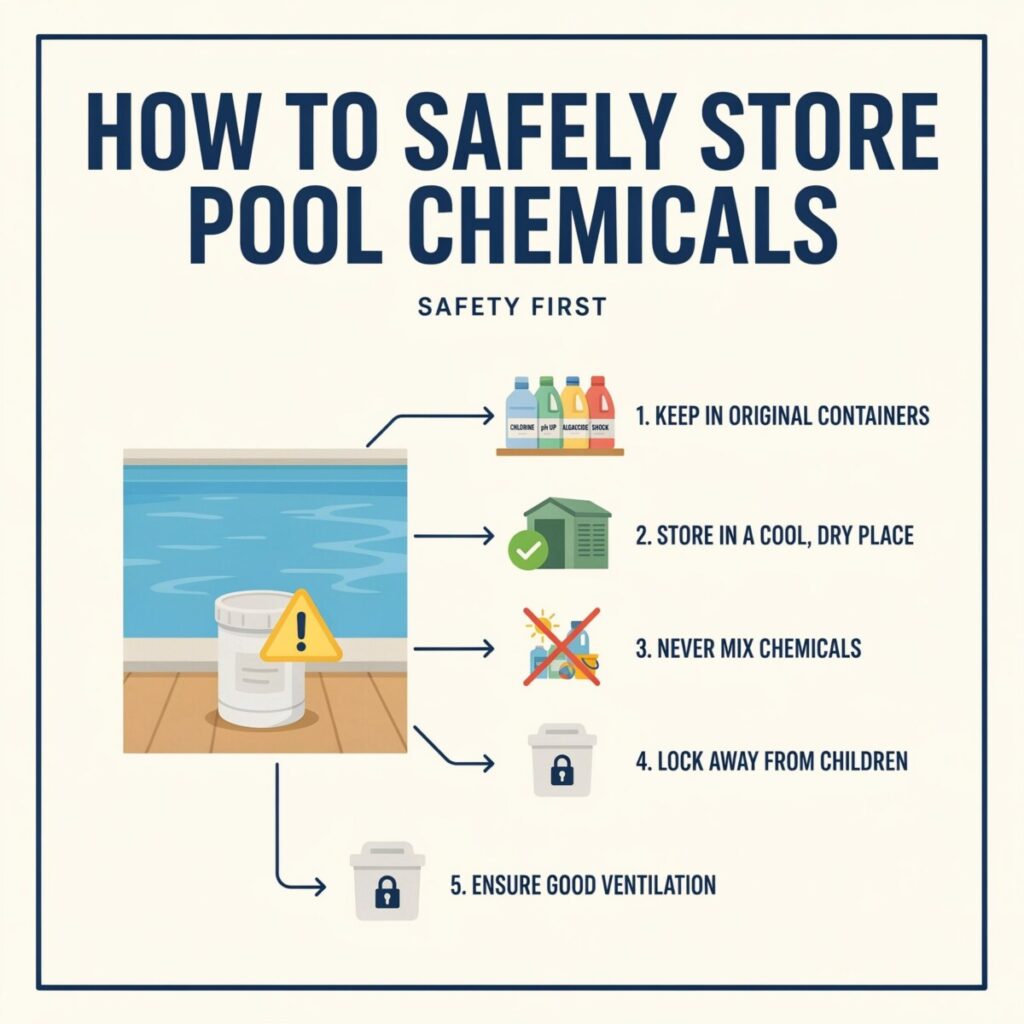
5. Keep Original Containers and Labels Intact
Always store chemicals in their original, labeled containers. Transferring chemicals to unmarked jugs or food containers is a common cause of accidental poisoning and dangerous mixing mistakes. If a label is fading, photograph it and tape a printed copy to the container.
6. Childproof and Secure
Use a lock — preferably a keyed deadbolt or combination lock — on the storage door. For added protection, store the most hazardous chemicals (acids and shock) inside a secondary locked cabinet or bin within the shed. Post clear “DANGER — POOL CHEMICALS — NO UNAUTHORIZED ACCESS” signage on the door.
7. Keep PPE Accessible
Store safety gear near (but not inside) the chemical area: chemical-resistant gloves, splash goggles, a long-sleeved shirt, and closed-toe shoes. If you handle muriatic acid frequently, keep an acid-rated respirator available as well.
8. Maintain an Inventory Log
A simple clipboard or digital spreadsheet tracking product name, date purchased, quantity on hand, and expiration or manufacture code helps you rotate stock, avoid over-ordering, and quickly identify what’s involved if a spill or emergency occurs.
Summer Storage: Protect Chemicals from Heat
Summer is peak pool season — which means your chemicals are working hard, and the conditions they live in are at their most hostile. Storing pool chemicals in summer requires extra attention to temperature control and handling safety.
Beat the Heat
Heat damage to chlorine products is a real and costly problem. Trichlor tablets stored above 95 °F can lose effectiveness rapidly and may even begin to off-gas chlorine inside their sealed bucket. Calcium hypochlorite becomes increasingly unstable at high temperatures, and sealed liquid chlorine containers can build enough internal pressure to bulge or burst.
Action steps:
- Move chemical storage out of metal sheds or uninsulated garages that can exceed 100 °F in direct sun. If that’s your only option, add reflective roof paint, insulation batts, or a radiant barrier to lower interior temperatures.
- Consider a climate-controlled utility room or basement corner for the most sensitive chemicals (liquid chlorine, cal-hypo shock).
- Install a small solar-powered vent fan to pull hot air out of a shed during peak afternoon hours.
Shield from Sunlight
UV exposure degrades plastics (making containers brittle) and breaks down chemical active ingredients. Never leave chemical containers in direct sunlight — even during transport from the car to the shed. Use an insulated cooler or a reflective tarp over containers if you need to leave them outside temporarily.
Monitor Moisture from Summer Humidity
High humidity is the enemy of dry chemicals. Keep bucket lids tightly sealed, and consider adding silica gel desiccant packets to the storage bins holding chlorine granules, CYA, and pH increasers. If you notice clumping in a dry product, it has absorbed moisture and may be less effective — use it promptly rather than letting it sit longer.
Transport Safely in Hot Weather
When picking up chemicals from a pool store in the summer, don’t leave them in a hot car trunk or truck bed. Transport them in the air-conditioned cabin, upright and secured so they can’t tip or spill. Go straight home and move them to proper storage immediately. Pool chemical storage tips like this one seem simple but prevent a surprising number of incidents every year.
Summer Storage Checklist
- [ ] Storage area stays below 90 °F (verify with thermometer)
- [ ] Ventilation is operational and unobstructed
- [ ] All containers sealed tightly with original labels intact
- [ ] Oxidizers (chlorine, shock) separated from acids and organics
- [ ] Desiccant packets placed in bins with dry chemicals
- [ ] Spill trays are empty and in place
- [ ] PPE is accessible and in good condition
- [ ] Inventory log is current
Winter Storage: Prevent Freezing and Moisture Damage
When pool season winds down, you might think chemical storage gets easier. It doesn’t — it just changes. Storing pool chemicals in winter introduces new risks: freezing temperatures, condensation, and long-term storage that invites neglect.
Prevent Freezing
Liquid chemicals — liquid chlorine (sodium hypochlorite), some algaecides, and liquid acid — can freeze or partially freeze below 32 °F. Freezing can crack plastic containers, compromise seals, and separate chemical components. Even if a product thaws and looks fine, its concentration may be altered.
Action steps:
- Move all liquid chemicals to a heated or insulated space before the first freeze. A heated garage, basement shelf, or utility closet above 40 °F is ideal.
- Never store liquid pool chemicals in an unheated shed or outdoor cabinet in freezing climates.
- If you must keep dry chemicals in an unheated but dry space, they will generally survive winter fine — but moisture is the concern, not just temperature.
Fight Condensation
Temperature swings between cold nights and slightly warmer days cause condensation inside sheds and garages. That moisture settles on containers, rusts metal shelving, and can drip into improperly sealed products.
Action steps:
- Elevate chemical containers off concrete floors using pallets or shelving. Concrete “sweats” when temperature differentials exist between the slab and interior air.
- Improve ventilation to equalize temperature and reduce condensation cycles.
- Inspect container seals monthly during the off-season. Re-tighten lids and check for cracks caused by freeze-thaw cycles.
Plan for Long-Term Storage
Winterizing pool chemicals isn’t just about the pool — it’s about deciding which chemicals to keep and which to dispose of. Chlorine products degrade over time even under ideal conditions. If you have a large amount of leftover chlorine that won’t be used for six or more months, consider whether it’s better used up before closing or properly disposed of rather than stored all winter.
Pool chemical disposal should always follow your local hazardous waste guidelines. Most county waste facilities accept pool chemicals during designated household hazardous waste (HHW) collection days. Never pour chemicals down a drain, storm sewer, or onto the ground.
Safe Off-Season Relocation
If your summer storage shed will be unheated in winter, plan a safe relocation:
- Transport chemicals in sealed, upright containers in your vehicle (never loose in a truck bed).
- Choose an interior space with ventilation — a basement utility room with a dehumidifier or a heated garage with cross-ventilation.
- Maintain the same segregation rules in the new location. Don’t let convenience override safety by tossing everything into a single closet.
Winter Storage Checklist
- [ ] All liquid chemicals moved to a space above 40 °F
- [ ] Containers elevated off concrete floors
- [ ] Ventilation adequate to prevent condensation
- [ ] Expired or degraded chemicals identified and scheduled for disposal
- [ ] All lids and seals inspected and re-tightened
- [ ] Inventory log updated with winter storage location noted
- [ ] Lock and signage in place at new storage location
- [ ] Emergency contact numbers posted (Poison Control, fire department)
Safe Handling, Mixing, and Transfer
How you handle chemicals is just as important as where you store them. A few core rules protect you every time you open a container.
Never Mix Chemicals
This cannot be overstated: prevent chemical mixing at all costs. Mixing chlorine with acid produces toxic chlorine gas. Mixing different types of chlorine (trichlor with cal-hypo) can cause fire or explosion. Mixing chlorine with ammonia or household cleaners produces chloramine gas. Always use a clean, dedicated scoop for each product — cross-contamination from a shared scoop has caused serious incidents.
Always Add Chemical to Water — Never Water to Chemical
This is a cardinal rule of pool chemical handling. When diluting acid or dissolving granular products, always add the chemical to a large volume of water — never pour water onto concentrated chemical. The reaction is exothermic and can cause violent splashing or boiling if done in reverse.
Wear PPE Every Time
Before opening any chemical container:
- Put on chemical-resistant gloves (nitrile or neoprene)
- Wear splash-proof safety goggles
- Use a long-sleeved shirt and closed-toe shoes
- Have a respirator available for acid handling or dusty products
Step-by-Step: Adding Chemicals to the Pool
- Test pool water and calculate the correct dose from the product label.
- Fill a clean plastic bucket halfway with pool water.
- Slowly add the measured chemical to the water (never the reverse). Stir gently.
- Broadcast the diluted solution evenly around the pool perimeter while the pump is running.
- Rinse the bucket and tools thoroughly with pool water.
- Wash hands and exposed skin with soap and water after handling.
Spill Response and Emergency Contacts
Even with perfect practices, accidents happen. Knowing how to respond calmly and correctly can prevent a minor spill from becoming a major incident.
Small Spill Cleanup (4–6 Steps)
- Evacuate and ventilate. Move people and pets away from the area. Open doors and windows to increase airflow.
- Put on PPE. Don gloves, goggles, and protective clothing before approaching the spill.
- Contain the spill. Use an absorbent material (vermiculite, kitty litter, or sand) to surround and soak up the liquid or contain the powder. Do not use sawdust or other organic materials near oxidizers like chlorine or shock.
- Neutralize if applicable. For small acid spills, you can carefully sprinkle baking soda over the area to neutralize. For chlorine spills, avoid adding anything reactive — simply absorb and contain.
- Collect and dispose. Scoop the absorbed material into a labeled, sealed plastic container. Contact your local household hazardous waste facility for proper pool chemical spill cleanup and disposal guidance.
- Decontaminate the area. Rinse the spill site with plenty of water and allow it to dry fully before restocking.
When to Call for Help
- Call 911 if a large spill occurs, if fire or toxic fumes are present, or if anyone is experiencing difficulty breathing, unconsciousness, or severe burns.
- Call Poison Control at 1-800-222-1222 (available 24/7 in the US) for any chemical ingestion, eye splash, or prolonged skin exposure. They provide free, expert guidance.
- Contact your local fire department or hazmat team for spills involving large quantities, unknown reactions, or chemical fires. Never attempt to fight a chemical fire with a standard water hose — this can make oxidizer fires significantly worse.
First-Aid Highlights
- Skin contact: Rinse affected area with running water for at least 15 minutes. Remove contaminated clothing.
- Eye contact: Flush eyes with lukewarm water for at least 15 minutes, holding eyelids open. Seek medical attention immediately.
- Inhalation: Move the person to fresh air immediately. If breathing is difficult, call 911.
- Ingestion: Do not induce vomiting unless directed by Poison Control. Call 1-800-222-1222 immediately.
Labeling, Inventory, and Legal Compliance
Good documentation isn’t just good practice — for HOAs and commercial pool operators, it may be a legal requirement under pool chemical storage regulations from OSHA, local fire codes, or state environmental agencies.
What to Label
- Every storage shelf or bin should have a clear label: “OXIDIZERS — CHLORINE ONLY,” “ACIDS — NO CHLORINE,” etc.
- Post a sign on the storage door with emergency contact numbers (911, Poison Control, your local fire department’s non-emergency line).
- If you transfer chemicals to a secondary container for daily use (a practice we generally discourage), that container must be labeled with the product name, hazard warnings, and date.
Inventory Best Practices
Maintain a simple log with:
- Product name and EPA registration number
- Quantity on hand
- Date purchased and manufacturer date code
- Storage location (especially useful if you relocate chemicals seasonally)
Compliance Basics
Pool chemical storage regulations vary by state, county, and municipality. At minimum:
- Review your local fire code requirements for residential oxidizer storage (most jurisdictions exempt household quantities, but HOA and commercial pools may have thresholds).
- Check your state’s environmental agency website for pool chemical disposal rules and HHW collection schedules.
- For commercial or community pools, ensure Safety Data Sheets (SDS) for every stored chemical are accessible on-site as required by OSHA’s Hazard Communication Standard.
Quick Seasonal Storage Checklist
☀️ Summer Essentials
- Keep storage area below 90 °F with active ventilation
- Shield all containers from direct sunlight
- Seal buckets and jugs tightly after every use
- Add desiccant packs to dry chemical bins
- Inspect liquid chlorine containers for bulging
- Transport chemicals in air-conditioned vehicle cabin
❄️ Winter Essentials
- Move all liquid chemicals above 40 °F before first freeze
- Elevate containers off concrete floors
- Improve ventilation to reduce condensation
- Inspect and re-tighten all container seals monthly
- Dispose of expired or degraded products properly
- Update inventory log with off-season storage location
Final Thoughts
Pool maintenance safety begins long before you dump a scoop of shock into the skimmer — it begins with how and where those chemicals live between uses. By understanding the specific hazards of each product, maintaining strict segregation and ventilation, and adapting your storage practices to the demands of summer heat and winter cold, you protect your family, your property, and the effectiveness of the products you rely on.
Always read and follow the manufacturer’s label — it is the most authoritative source for any specific product. When in doubt about pool chemical safety, disposal, or compliance, contact your local fire department, hazardous waste facility, or a certified pool service professional. A few minutes of prevention today saves you from a crisis tomorrow.
This article is provided for informational purposes only and does not constitute professional hazardous-materials advice. Always consult manufacturer labels, local codes, and qualified professionals for guidance specific to your situation.