So, you just got a pool. Congratulations — and welcome to the wonderful, slightly overwhelming world of pool ownership. Whether you just finished installing a sparkling in‑ground pool in your backyard or set up a new above‑ground pool for the family, the excitement is real. But if you’re staring at the water and wondering, “Now what do I actually need to take care of this thing?” — you’re not alone.
The good news is that maintaining a residential pool doesn’t require a truckload of expensive gadgets. A focused pool starter kit for homeowners covers safety, water chemistry, cleaning, and circulation — and once you understand the basics, it all clicks into place pretty quickly.
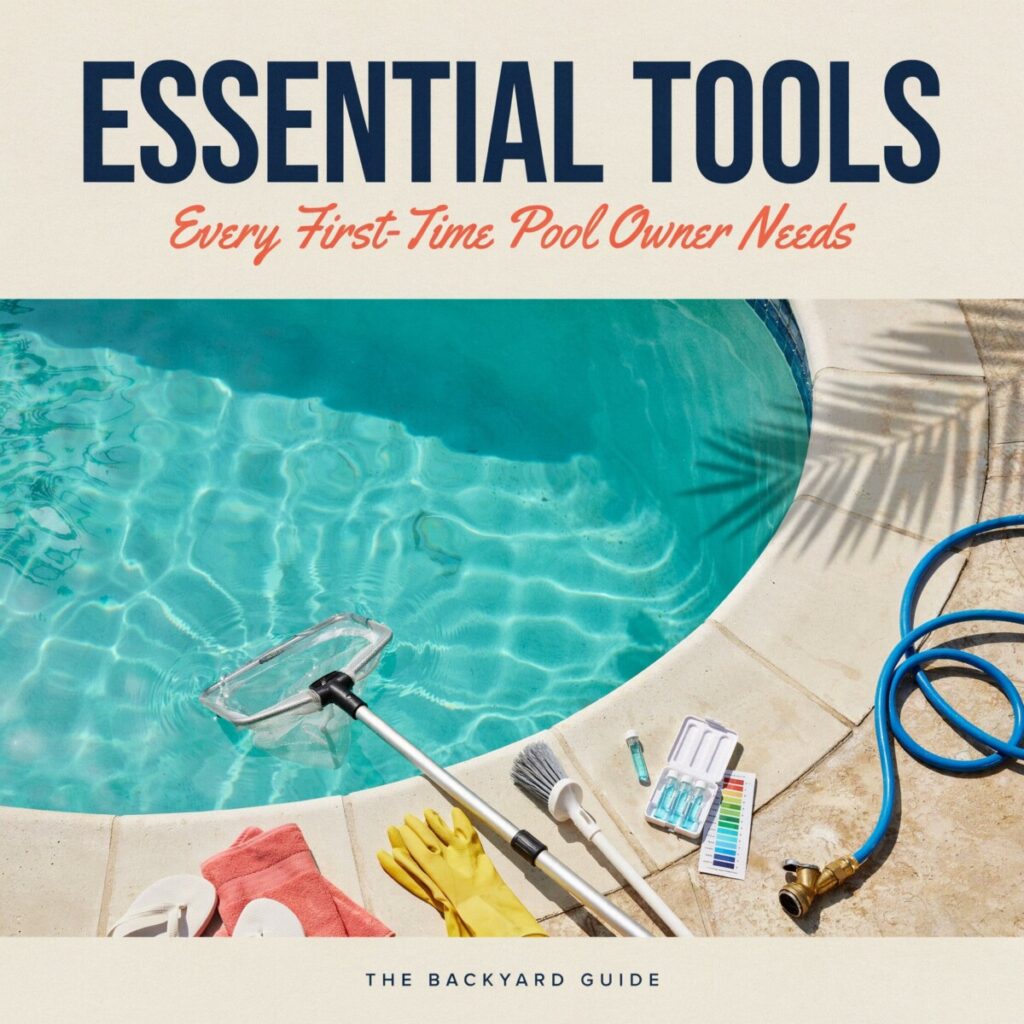
This guide walks you through every essential tool for first‑time pool owners, explains why each one matters, gives you rough cost expectations, and shares simple maintenance tips you can start using this week. By the end, you’ll have a practical plan for your first month of ownership — and the confidence to keep your water clean, safe, and swim‑ready.
Basic Safety and Setup Essentials
Before you worry about chemistry or cleaning, lock in safety. This is non‑negotiable, and it also protects you from liability.
Pool covers come in three main flavors: manual tarp covers ($30–$80), safety covers rated to hold weight ($300–$1,500+ for in‑ground pools), and solar covers that trap heat and reduce evaporation ($50–$200). A safety cover is the strongest option if you have young children or pets; a solar cover is great for cutting heating costs in cooler climates.
A life ring or throwable flotation device ($15–$40) should be mounted visibly near the pool at all times. Pair it with a reaching pole (your telescoping pole doubles here).
Pool alarms ($50–$250) are increasingly common — and in some states and municipalities, they’re legally required. Options include gate alarms, surface wave sensors, and wearable wristband alarms for kids.
Don’t skip the regulatory homework. Most US localities require a minimum 4‑foot fence with a self‑closing, self‑latching gate around residential pools. Check your city or county ordinances before your first pool party — non‑compliance can mean fines and, worse, real danger. Investing $200–$500 in proper fencing and a compliant gate isn’t just smart; it’s often the law.
Water Testing and Chemistry Tools
This is where most new pool owners feel the most lost — and it’s also the single most important category to get right. Clear, balanced water is safe water; unbalanced water can irritate skin, corrode equipment, and turn your pool green in days.
Test Strips
Pool water testing kit options start with test strips ($8–$15 for a bottle of 50–100). Dip, wait 15 seconds, compare color blocks. They measure pH, free chlorine, total alkalinity, and sometimes cyanuric acid (stabilizer). Strips are fast and convenient, but they’re the least accurate option — fine for quick daily checks, not great for diagnosing a problem.
Liquid Drop Test Kits
A liquid test kit ($25–$50) uses reagent drops and a comparator block. You fill a vial, add drops, and watch the color change. These measure the same parameters as strips but with much better accuracy. Most pool pros consider a liquid kit the minimum standard for pool balancing.
Digital Testers and Colorimeters
Digital pool testers and colorimeters ($50–$250) use light sensors to read color changes precisely, removing human guesswork. They’re especially helpful if you have trouble distinguishing color shades. Great for precision, but they cost more and require batteries and occasional calibration.
What Each Parameter Means
| Parameter | Ideal Range | Why It Matters |
|---|---|---|
| pH | 7.2–7.6 | Too low corrodes metal; too high causes scaling and cloudy water |
| Free Chlorine | 1–3 ppm | The chlorine actually sanitizing your water |
| Total Chlorine | Within 0.5 ppm of free | Big gap = combined chlorine (chloramines), meaning you need to pool shock |
| Total Alkalinity | 80–120 ppm | Buffers pH so it doesn’t swing wildly |
| Calcium Hardness | 200–400 ppm | Too low etches plaster; too high causes scale |
| Cyanuric Acid | 30–50 ppm | Protects chlorine from UV breakdown; too high locks chlorine out |
Testing Frequency Schedule
- Daily: Free chlorine and pH (quick strip check is fine)
- Weekly: Full liquid test of all parameters
- Monthly: Calcium hardness and cyanuric acid (these change slowly)
Quick Troubleshooting
- High pH (above 7.8): Add muriatic acid or dry acid (sodium bisulfate). Retest in 6 hours.
- Low chlorine: Shock the pool or add your regular sanitizer. Check that your pump is running enough hours.
- Cloudy water after rain: Test everything; rain dilutes chemistry. Rebalance and run the filter 24 hours.
Saltwater pool tools include a separate salt test strip or titration kit ($10–$20) and a salinity meter if you want precision. Saltwater pools still need chlorine monitoring — the salt cell generates chlorine, but you still test for it.
Cleaning and Debris Removal Tools
Keeping physical debris out of the water is half the battle. Here’s the lineup.
Telescoping Pole
Your telescopic pole ($20–$50) is the backbone of manual cleaning. It extends from about 5 to 16 feet and accepts skimmer nets, brushes, and vacuum heads via a standard threaded or pin attachment. Buy a sturdy aluminum one; cheap plastic poles bend under load.
Leaf Skimmer / Net
A pool skimmer net ($10–$25) attaches to your pole and comes in two styles: a flat “rake” for surface skimming, and a deeper “bag” net for scooping sunken leaves and heavier debris off the floor. Most owners end up with both.
Pool Brush
A pool brush ($10–$25) with a curved head scrubs walls and tile lines. Use nylon bristles for vinyl liners, fiberglass, and painted surfaces; use stainless steel bristles only on bare plaster or gunite — steel will scratch softer finishes. Brush walls weekly to prevent algae from taking hold.
Pool Vacuum
Pool vacuum types fall into four categories:
- Manual vacuum head and hose ($30–$80): Attaches to your skimmer suction port. You push it around the floor. Cheap and effective, but time‑consuming.
- Suction‑side automatic ($200–$500): Hoses into the skimmer and roams the pool on its own. Good middle ground.
- Pressure‑side automatic ($300–$700): Uses a booster pump or return jet to move. Better for heavy debris.
- Robotic pool cleaner ($400–$1,500): Self‑contained, plugs into a GFCI outlet, runs on its own cycle. The most expensive but also the most effective and energy‑efficient option.
For above‑ground pool tools, a manual vacuum or a suction‑side cleaner made for flat bottoms is usually sufficient. For in‑ground pool tools with complex shapes and deep ends, a robotic cleaner pays for itself in time saved.
Pool Cover Pump
A small pool cover pump ($30–$80) removes standing rainwater from your pool cover so it doesn’t sag, breed mosquitoes, or dump dirty water back in when you pull the cover off. Submersible utility pumps also work here.
Tool Care Tip
Rinse every tool with fresh water after use and store indoors or in a shaded area. UV exposure and chlorine residue degrade plastics and rubber quickly. A $20 brush can last 5 years or 1 year depending on storage.
Circulation, Filtration, and Mechanical Tools
Your pool pump and filter maintenance routine keeps water moving and clear. Here’s what you need to support it.
Understanding Your Filter Type
- Sand filter: Uses a bed of pool‑grade sand. Backwashing (reversing flow to flush trapped debris out) every 4–6 weeks. Sand replacement every 5–7 years.
- Cartridge filter: Uses a pleated fabric cartridge you remove, hose off, and replace every 1–2 seasons. No backwashing needed.
- Diatomaceous earth (DE) filter: Coats internal grids with DE powder for the finest filtration. Requires periodic backwashing and recharging with fresh DE.
Key Maintenance Tools
- Pressure gauge (usually built into the filter): When pressure rises 8–10 psi above clean baseline, it’s time to backwash or clean.
- Backwash hose ($20–$40): A flexible, collapsible hose that routes waste water away from the pool pad to a drainage area.
- Multiport valve wrench or strap wrench ($10–$25): For opening the valve on sand/DE filters to inspect the spider gasket.
- Replacement cartridges or O‑rings ($20–$80): Keep a spare cartridge and a small kit of common O‑rings (pump lid, drain plug, filter clamp) on hand.
Basic Plumbing Supplies
Keep a small kit with stainless steel hose clamps, Teflon tape (plumber’s tape) for threaded fittings, and pool‑lube (a silicone‑based lubricant for O‑rings — never use petroleum jelly, which eats rubber). These cost under $20 total and save you trips to the hardware store.
When to call a pro: If your pump is making grinding noises, your filter is leaking from a crack (not a loose clamp), or you’re losing more than ¼ inch of water per day beyond evaporation, bring in a licensed pool technician. Electrical work on pumps and heaters should always be handled by a pro.
Chemical Handling and Dosing Tools
Chemical safety for pools starts with the right accessories, not just the chemicals themselves.
Essential Dosing Tools
- Chemical floater or inline feeder ($10–$40): Dispenses chlorine tabs or sticks slowly. Never toss tabs directly into the pool — they’ll stain the finish.
- Dedicated plastic bucket and stirring stick ($5–$10): Use only for pool chemicals. Never reuse a household bucket.
- Chemical‑resistant gloves and goggles ($10–$20): Muriatic acid and dry shock can burn skin and eyes.
- Measuring cups and scoops ($5–$15): Dedicated to each chemical type — cross‑contamination between products can cause dangerous reactions.
- Pump dosing system ($100–$400): For liquid chlorine or muriatic acid, an automated peristaltic pump doses on a timer. Optional but convenient for larger pools.
Safety Rules
- Never mix chemicals. Chlorine + acid = toxic chlorine gas. Store products separately.
- Store chemicals in a cool, dry, locked area away from children, pets, and flammable materials.
- Always add chemicals to water, never water to chemicals.
- Dispose of old or clumped chemicals through your local hazardous waste program — don’t toss them in the trash.
Budget around $30–$60 to get properly set up with gloves, goggles, buckets, and measuring tools.
Seasonal and Extra Helpful Tools
Depending on your climate, some extras earn their keep.
- Winterizing kits ($40–$120): Include a pool pillow (air bag), winter cover, plugs for return jets, and non‑toxic antifreeze. Essential in the Northeast and Midwest; unnecessary in South Florida or Southern California where pools run year‑round.
- Leaf net ($30–$80): A large mesh net that drapes over the pool cover in fall to catch leaves before they reach the cover surface. A huge time‑saver if you have mature trees nearby.
- Solar blanket reel / lifter ($80–$300): Rolls up a solar cover neatly so one person can handle it.
- Pool thermometer ($10–$30): Floating or digital; helps you decide when the heater is needed.
- Smartphone‑connected monitor ($150–$500): Optional; these drop into the pool and send pH, chlorine, and temperature readings to your phone. Convenient, but not a replacement for manual testing.
- Maintenance logbook or app: A simple notebook or a free app (like Pool Care or iPoolcare) to track test results, chemical additions, and filter cleanings. Patterns become obvious fast when you log them.
Quick Shopping Checklist
Here’s your at‑a‑glance pool cleaning checklist and tool list:
- [ ] Pool cover (safety, solar, or manual)
- [ ] Life ring or throwable flotation device
- [ ] Pool alarm (gate, surface, or wearable)
- [ ] Test strips + liquid test kit (or digital tester)
- [ ] Salt test kit (saltwater pools only)
- [ ] Telescoping pole (aluminum, 5–16 ft)
- [ ] Leaf skimmer net (flat rake + deep bag)
- [ ] Pool brush (nylon for vinyl/fiberglass; steel for plaster only)
- [ ] Pool vacuum (manual, suction, pressure, or robotic)
- [ ] Pool cover pump
- [ ] Backwash hose (sand/DE filters)
- [ ] Replacement filter cartridges or sand/DE supply
- [ ] O‑ring kit + pool lube + Teflon tape
- [ ] Chemical floater or inline feeder
- [ ] Dedicated bucket, stirring stick, measuring cups
- [ ] Chemical‑resistant gloves and goggles
- [ ] Pool thermometer
- [ ] Maintenance logbook or app
- [ ] Winterizing kit (cold‑climate regions)
- [ ] Leaf net (heavily treed lots)
A Sample First‑Month Timeline
Here’s what a typical first month looks like in practice: Install your safety cover, alarm, and fence before the first swim. On day one, test water with your liquid kit and balance pH and alkalinity first, then add chlorine. For the first four weeks, skim the surface daily with your net, brush walls once a week, run the pump 8–12 hours daily, test chlorine and pH every 2–3 days, and do a full parameter test weekly. Vacuum as needed — usually once a week for in‑ground pools, less for above‑ground. By week four, you’ll have a feel for your pool’s rhythm.
Closing Thoughts
Starting with the right pool maintenance tools for new pool owners makes everything easier. Prioritize safety equipment and water testing first, then add your cleaning tools and filtration supplies. Set a simple routine — daily skimming, testing every 2–3 days, running the pump 8–12 hours — and stick with it. Pools reward consistency far more than heroic weekend cleanups.
Got questions about a specific pool starter kit for homeowners setup, or need help choosing between above‑ground pool tools and in‑ground pool tools? Drop a comment below. And for installations, major equipment swaps, or anything electrical, always reach out to a licensed local pool professional.
Frequently Asked Questions
How often should I test my pool water?
Test free chlorine and pH every 2–3 days (daily in peak summer). Do a full test including alkalinity, calcium hardness, and cyanuric acid weekly.
Which vacuum is best for a new pool owner?
A manual vacuum head ($30–$50) is the cheapest and most reliable starting point. If your budget allows and you value convenience, a robotic pool cleaner ($400+) is the best “set it and forget it” upgrade.
What’s the most important safety tool?
A compliant fence with a self‑closing, self‑latching gate is the single most important safety feature. A pool alarm and life ring add critical backup layers.
Can I use household bleach to sanitize my pool?
Standard unscented household bleach (5–6% sodium hypochlorite) can sanitize a pool in a pinch, but it lacks stabilizer and you’ll need to dose carefully. Dedicated pool liquid chlorine (10–12.5%) is more reliable for routine use.
When should I call a professional?
Call a pro for electrical issues, structural leaks, persistent water chemistry problems you can’t diagnose after two full tests, or any equipment replacement involving plumbing or gas lines.