Pool care is not just about sparkle — it is about safety. A cloudy splash after a weekend BBQ can ruin more than your party; it can signal dangerous pool water that threatens your family’s health, damages expensive equipment, and turns your backyard oasis into a liability. Whether you are a homeowner firing up the grill for summer cookouts, a rental property manager juggling multiple properties, or a DIY pool caretaker who takes pride in a crystal-clear swim, understanding your pool water balance is the single most important thing you can do.
When pool chemical balance drifts out of range, the consequences stack up fast. Skin rashes, stinging eyes, respiratory irritation, and stomach illnesses top the CDC’s list of recreational water illnesses. Meanwhile, unbalanced water quietly corrodes heaters, etches plaster, and stains finishes — repairs that can cost thousands.
The good news? Most problems announce themselves early, if you know what to look for. Below are five clear warning signs your pool water is unsafe, along with specific tests to run, corrective actions you can take today, and prevention tips that keep problems from coming back. Grab your pool test kit, and let us get started.

Warning Sign #1: Cloudy or Murky Water
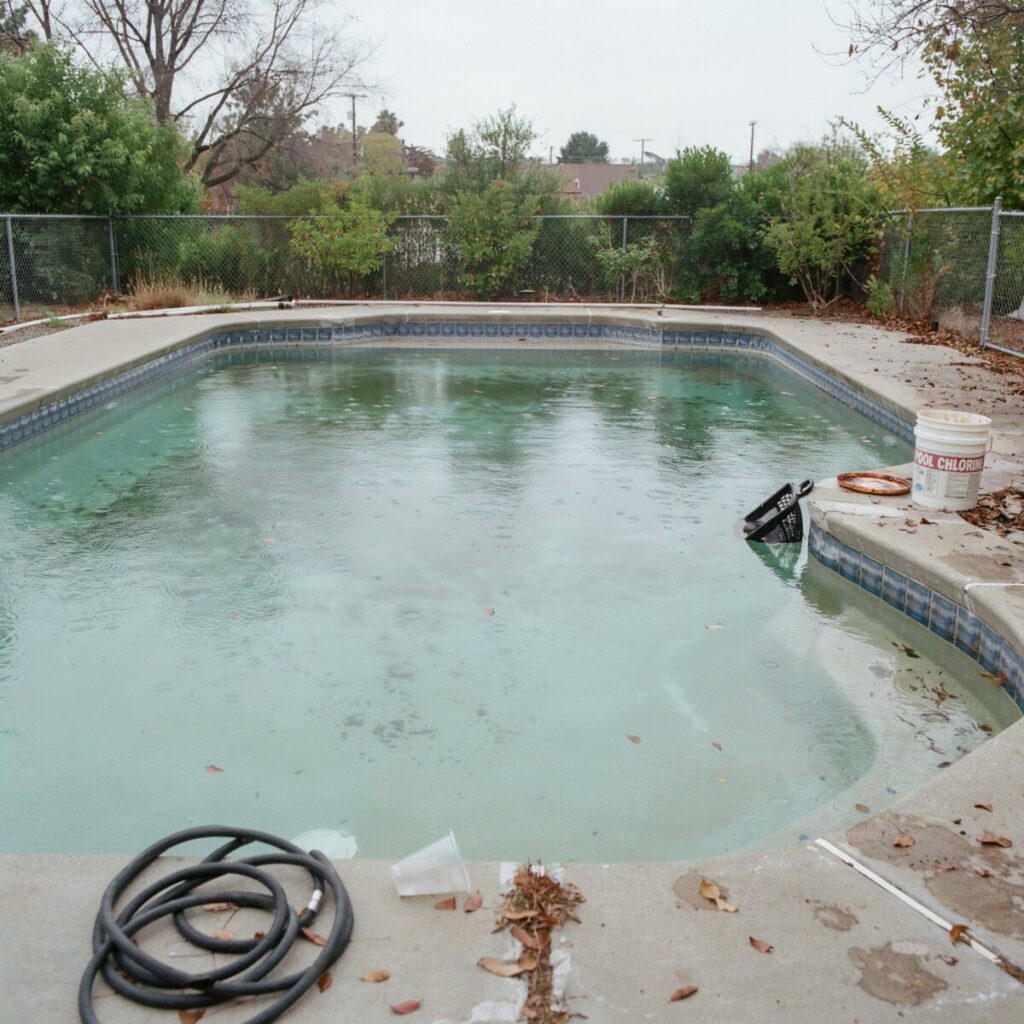
You walk outside expecting a refreshing dip, but the water looks like weak lemonade. Cloudy pool water is one of the most common — and most ignored — signs your pool water balance is off. While a brief haze after a heavy rain or a pool party can clear on its own, persistent cloudiness that lasts more than 24 hours means something is wrong.
What Causes Cloudy Pool Water?
Cloudiness is usually caused by one (or a combination) of these issues:
- Low free chlorine (below 1 ppm), allowing microscopic organic matter to build up.
- High pH or high total alkalinity, which reduces chlorine effectiveness and can cause calcium to precipitate out of solution.
- Poor filtration — dirty filter, short run times, or an undersized pump.
- High bather load introducing sweat, sunscreen, and body oils faster than the sanitizer can oxidize them.
- Fine debris and pollen that bypass a worn filter.
How to Test and Identify the Root Cause
Use a reliable DPD-based pool test kit (test strips are convenient but less accurate, per CDC guidance). Check free chlorine, pH, total alkalinity, calcium hardness, and cyanuric acid. If free chlorine is below 1 ppm, that is your first red flag. If pH is above 7.8, chlorine works less effectively and calcium can drop out, creating a milky look. (Note: Always verify safe ranges on your product labels and check local health department guidance.)
Immediate Steps to Clear Cloudy Water
- Run the pump 24 hours until water clears.
- Clean or backwash the filter.
- Shock the pool to raise free chlorine to 10 ppm overnight (see our guide: “Pool Shock vs. Regular Chlorination”).
- Re-test in the morning and adjust pH to 7.2–7.8.
- Use a clarifier if particles are too small for the filter, or a flocculant to vacuum debris to waste.
Prevention Tips
Test water at least twice weekly during swim season, run the pump 8–12 hours daily in summer, and ask guests to rinse off before jumping in. A simple pool maintenance checklist posted by the equipment pad keeps everyone accountable.
Warning Sign #2: Strong Chlorine Smell and Swimmer Irritation
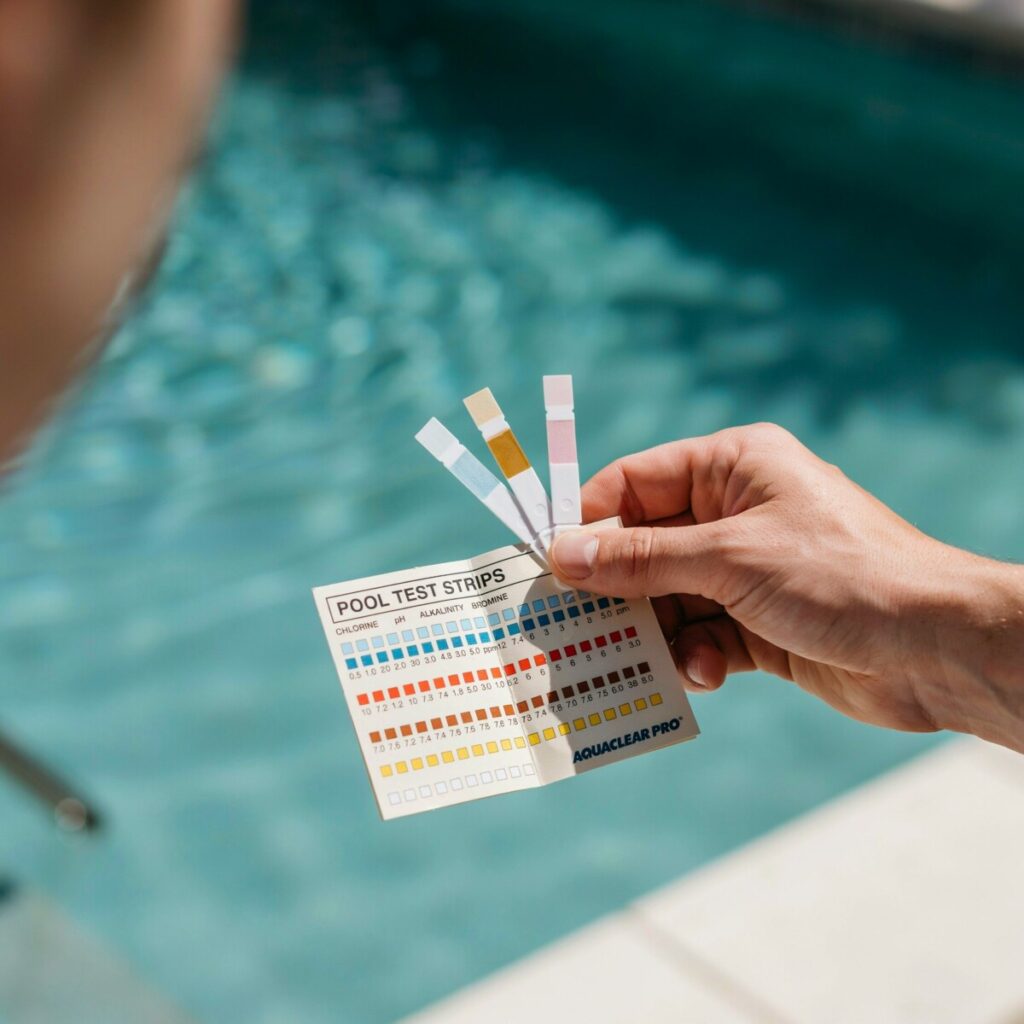
Here is a myth worth busting: a strong chlorine smell does not mean the pool is “extra clean.” It usually means the opposite. That unmistakable “pool smell” is actually caused by chloramines — combined chlorine compounds that form when free chlorine reacts with sweat, body oils, urine, and cosmetics. In other words, a high chlorine smell is a sign of dirty, poorly balanced water, not a well-sanitized one.
Eye redness, itchy skin, and respiratory irritation share the same root cause. The CDC notes that chlorine mixed with organic contaminants produces chemicals that make swimmers’ eyes sting and turn red. Low pH amplifies the problem by making the water more acidic and irritating, while high pH reduces chlorine’s germ-killing power.
What the Numbers Should Show
| Parameter | Safe Residential Range |
|---|---|
| Free chlorine | 1–3 ppm (min. 2 ppm if using cyanuric acid) |
| Combined chlorine (chloramines) | <0.2 ppm |
| pH | 7.2–7.8 (CDC accepts 7.0–7.8) |
| Total alkalinity | 80–120 ppm |
If your test shows free chlorine below 1 ppm and combined chlorine above 0.5 ppm, you have a chloramine problem.
Shock vs. Routine Dosing
Regular daily or weekly chlorine tabs maintain a baseline, but they cannot break down built-up chloramines. Only pool shock (a high-dose oxidizer like calcium hypochlorite or non-chlorine MPS) can destroy combined chlorine and restore sanitizer performance. For swimmer irritation issues, a breakpoint chlorination shock — raising free chlorine to roughly 10× the combined chlorine level — is usually required.
Safety Precautions When Shocking
- Wear gloves and eye protection.
- Never mix chemicals together.
- Add chemicals to water, never water to chemicals.
- Wait until free chlorine drops back below 4–5 ppm before swimming — generally 8–24 hours after shocking.
Warning Sign #3: Staining, Scaling, or Cloudy Calcium Deposits
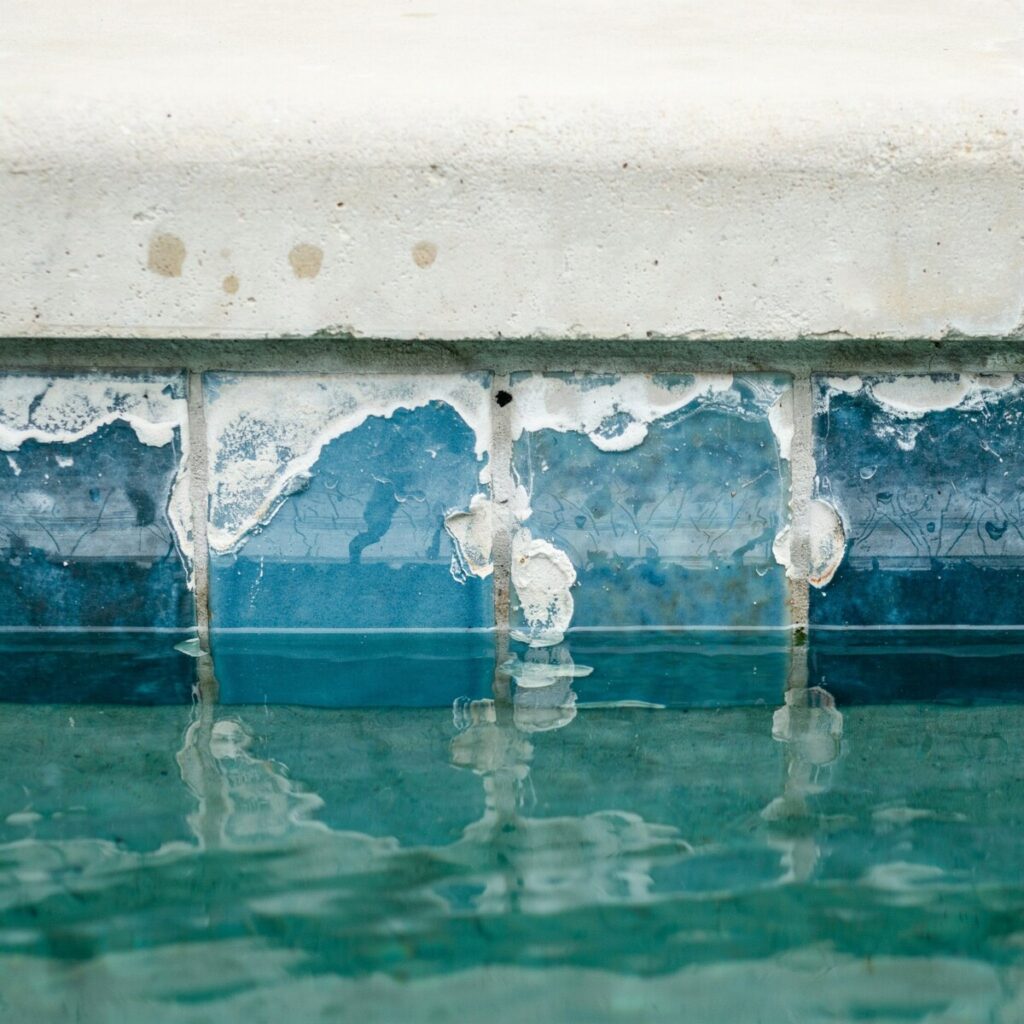
If your tile line crusts over with a white, chalky ring or your pool floor shows brown, gray, or rust-colored stains, your water is telling you something urgent. Staining and scaling are classic symptoms of bad pool water balance — and left alone, they can permanently ruin plaster, clog heaters, and shorten the life of your salt cell.
What Causes Pool Scaling?
Scaling happens when calcium hardness climbs too high (above 400 ppm), pH drifts above 7.8, or total alkalinity exceeds 120 ppm. The water literally cannot hold the dissolved minerals anymore, so they precipitate out and cement themselves to surfaces. Warm water — such as inside a heater or spa — accelerates the problem.
What Causes Staining?
- Brown or rust stains: Usually dissolved metals (iron, copper, manganese) from well water or corroded equipment.
- Green or black stains: Often algae rooting into plaster pores — a sign low sanitizer allowed a foothold.
- Gray, blotchy stains: Can indicate plaster etching from chronically low pH.
How to Test and Treat
Test calcium hardness (target: 200–400 ppm; plaster pools can tolerate the higher end) and metals. For scale, lower pH to 7.2–7.4 and total alkalinity toward 80–100 ppm, then apply a scale-inhibiting sequestrant. For metal stains, use a metal sequestrant or ascorbic acid treatment per manufacturer directions. A pumice stone or stain eraser handles spot stains without draining the pool.
Quick tip: Never use muriatic acid on stains without testing first — it can make metal stains worse.
Equipment Risks You Cannot Ignore
Scaling inside a pool heater can reduce efficiency by 30% or more and eventually crack the heat exchanger. Saltwater pools are especially vulnerable, as scale on the salt cell shuts down chlorine production entirely. Annual heater inspection and routine water testing are the cheapest insurance you can buy.
Warning Sign #4: Rapid Algae Growth or Recurring Blooms
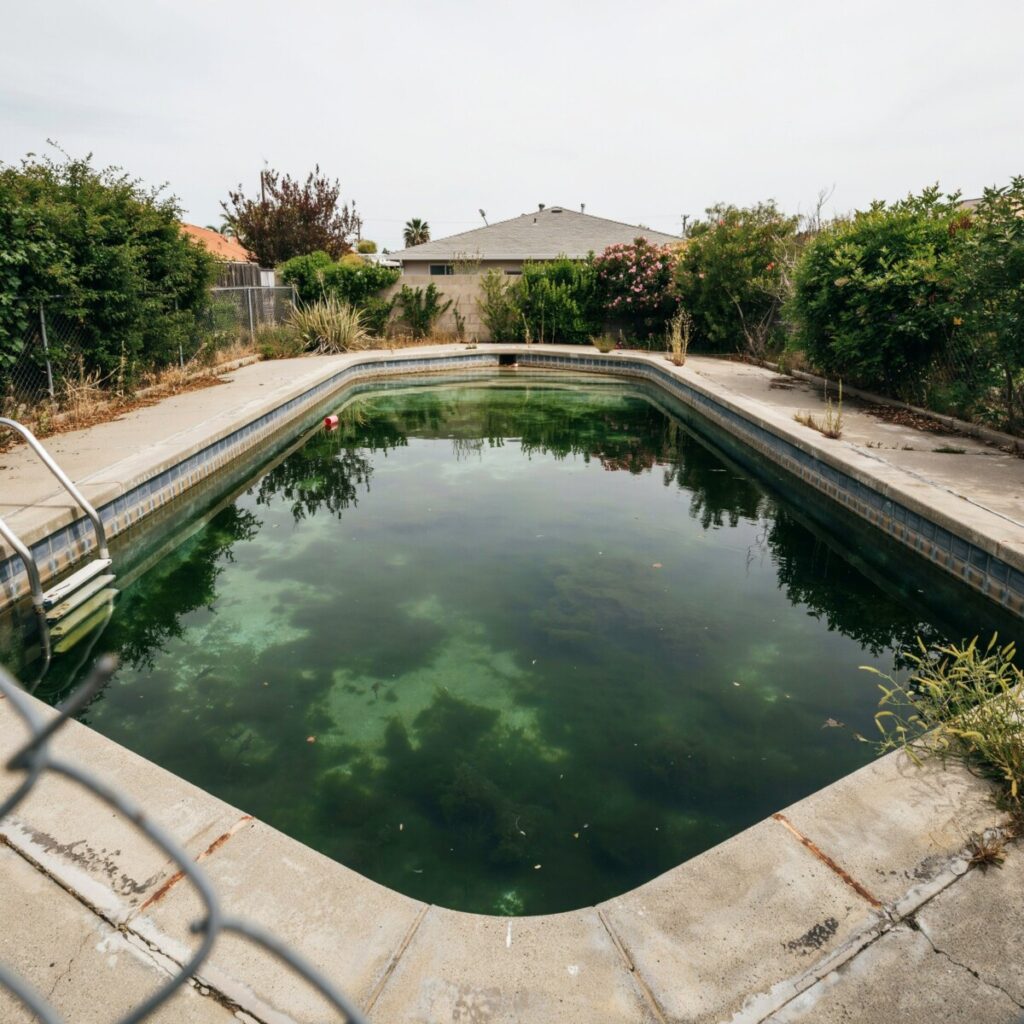
You shocked the pool on Monday, and by Thursday the water is green again. Recurring algae in your pool is not a cosmetic nuisance — it is proof that something in your pool water treatment routine is fundamentally broken. Algae can harbor bacteria, make pool surfaces dangerously slippery, and consume sanitizer so fast that your pool becomes genuinely unsafe within hours.
Why Algae Keeps Coming Back
Algae needs three things: sunlight, nutrients (especially phosphates), and low sanitizer levels. Common underlying causes include:
- Free chlorine chronically below 1 ppm.
- Poor circulation — dead spots in return jets or short pump run times.
- High phosphate levels from runoff, fertilizers, or certain algaecides.
- A dirty or bypassing filter.
- High cyanuric acid (>100 ppm) locking up chlorine and making it ineffective.
Step-by-Step Algae Remediation
- Test the water — free chlorine, pH, phosphates, and cyanuric acid.
- Brush every surface aggressively to break the algae’s protective biofilm.
- Adjust pH to 7.2–7.4 so chlorine works at maximum strength.
- Shock the pool heavily — green algae may require 20–30 ppm free chlorine; stubborn black algae, even more.
- Run the pump 24/7 and backwash or clean the filter daily until water clears.
- Add a quality algaecide (copper-free or polyquat) as a follow-up, not a substitute for chlorine.
- Vacuum dead algae to waste once it settles.
A Prevention Plan That Works
- Maintain free chlorine at 1–3 ppm year-round (higher in peak summer).
- Run the pump at least one full turnover per day — typically 8–12 hours.
- Keep phosphate levels below 500 ppb using a phosphate remover if needed.
- Partially drain and refill if cyanuric acid exceeds 80–100 ppm.
Warning Sign #5: Corrosion, Etching, or Damaged Surfaces and Equipment
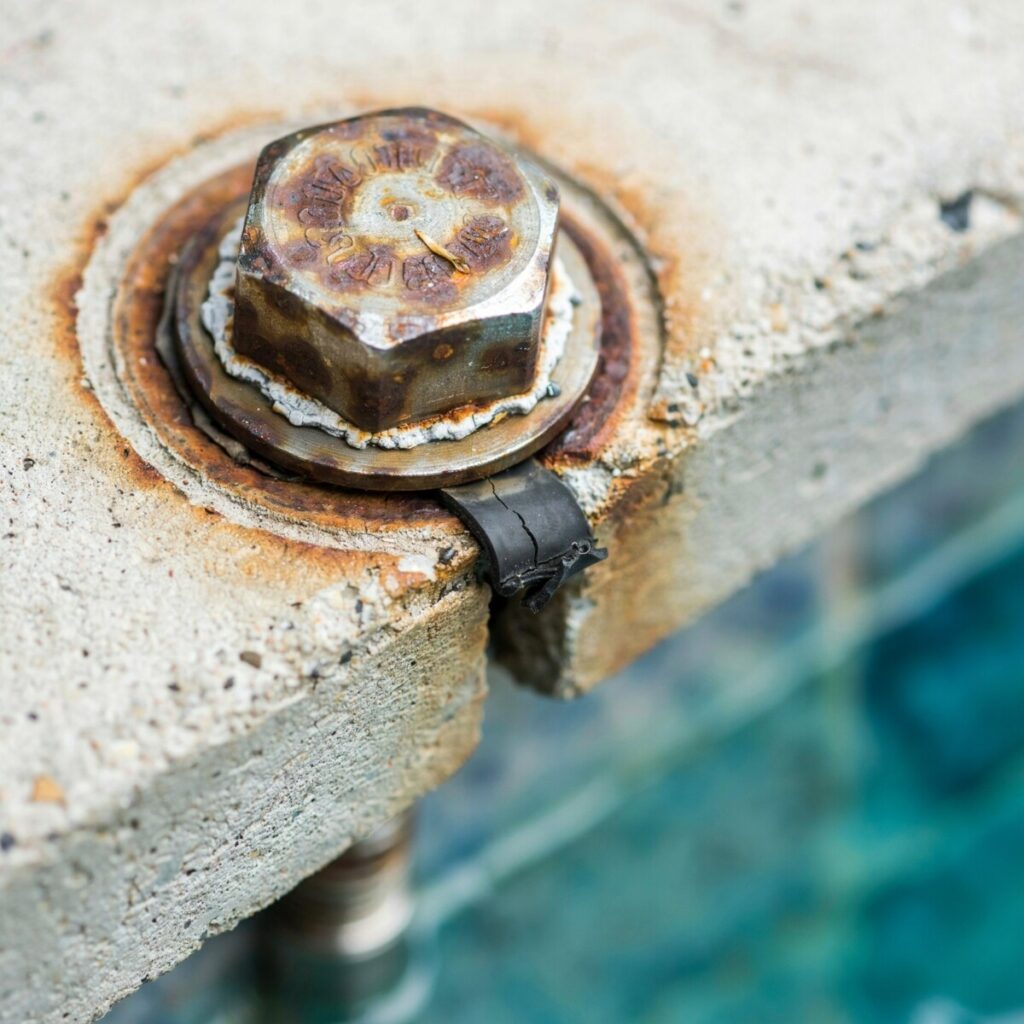
If pool scaling is the result of water that is too “hard,” corrosion is the result of water that is too “hungry.” When pH drops below 7.0 or total alkalinity falls below 60 ppm, the water becomes aggressive — pulling minerals and metals out of anything it touches. The damage is often silent, expensive, and irreversible.
Signs of Corrosive Pool Water
- Rough, pitted, or etched plaster and grout.
- Copper staining (teal or blue-green marks) from corroded heater elements.
- Pitted stainless-steel ladders, railings, and light rings.
- Pinhole leaks in copper plumbing or heater tubes.
- Eye and skin irritation in swimmers — low pH water feels “sharp.”
The CDC confirms that when pH drops below 7.0, pool pipes are more likely to corrode or break down, even though chlorine technically kills germs faster.
How to Inspect and Confirm
Check visible metal hardware first — ladder anchors, screws on light niches, heater unions. If you see green or blue deposits, corrosion is already underway. Confirm with a water test: pH below 7.0 or total alkalinity below 60 ppm is your smoking gun. A professional Langlier Saturation Index (LSI) calculation tells you whether your water is scale-forming, balanced, or corrosive overall.
Corrective Chemistry
Raise pH gradually with soda ash (sodium carbonate) and boost total alkalinity with sodium bicarbonate. Do not try to fix a severe imbalance in one day — rapid chemical swings can cause their own problems. Re-test after 6 hours of circulation, and repeat until both numbers are in range.
When to Call a Professional
If you see active copper staining, pinhole leaks, or plaster that feels rough like sandpaper, call a licensed pool professional. Corrosion damage compounds quickly, and some repairs (heater replacement, replastering) require licensed contractors. A one-time water balance audit by a pro costs a fraction of the damage it prevents.
Immediate Steps If You Notice Dangerous Pool Water
Print this checklist and keep it by your equipment pad.
- Keep swimmers out until the problem is identified and corrected.
- Test the water using a reliable DPD test kit — log every reading.
- Identify the primary imbalance (low chlorine, high pH, etc.) before adding anything.
- Correct one chemical at a time, following product labels exactly.
- Run the pump continuously until water clears and readings stabilize.
- Re-test after 6–12 hours and adjust as needed.
- Document the issue and fix in your pool maintenance log for future reference.
Frequently Asked Questions
How often should I test my pool water?
For residential pools, test free chlorine and pH at least twice per week during swim season and once weekly in the off-season. Test total alkalinity, calcium hardness, and cyanuric acid monthly. The CDC recommends testing chlorine and pH at least twice daily for heavily used pools or public facilities. Keep a written log — trends matter more than any single reading.
Can I swim immediately after balancing my pool water?
It depends on what you added. Routine pH adjustment or small chlorine doses are generally safe after 30 minutes of circulation. After pool shock, wait until free chlorine drops below 4–5 ppm — typically 8 to 24 hours. Always read the product label, and when in doubt, wait one full pump cycle before getting in.
When should I call a pool professional instead of fixing it myself?
Call a pro if you see recurring algae despite proper chlorination, visible corrosion or copper staining, persistent cloudiness after 48 hours of treatment, or if test results seem wildly off. Also call when opening or closing the pool for the season, or if you are inheriting a new pool and want a baseline water analysis.
Conclusion: Safe Water Is Balanced Water
Dangerous pool water rarely announces itself with drama — it creeps in through cloudy haze, a stinging eye, a stubborn ring of scale. By learning to recognize these five warning signs — cloudiness, chemical odors and irritation, staining and scaling, recurring algae, and corrosion — you protect your swimmers, your equipment, and your wallet.
Your action plan this week: test your water, log the results, and post a printable pool maintenance checklist by your equipment pad. If any reading gives you pause, contact a local pool professional for an inspection before problems compound.
Stay safe, stay balanced, and enjoy every swim.