If you’ve started researching a backyard pool, you probably already know it’s not a simple decision. Choosing the right types of swimming pools is really about stacking several decisions on top of each other — installation method, construction material, shape, purpose, heating, sanitation, filtration, and the feature add-ons that turn a basic pool into your dream backyard escape.
Think of it like buying a car. You don’t just pick “sedan or SUV.” You also choose the engine, the fuel type, the interior package, and the tech features. Pools work the same way. A “rectangular in-ground concrete pool with a saltwater system and a heat pump” is a very different project — and a very different price tag — than a “round above-ground steel-walled pool with a cartridge filter.”
Here’s a quick reality check on cost before we dive in:
- Above-ground pools: $1,500–$15,000 installed
- Semi in-ground pools: $10,000–$25,000 installed
- In-ground vinyl-liner pools: $35,000–$65,000 installed
- In-ground fiberglass pools: $45,000–$85,000 installed
- In-ground concrete/gunite pools: $50,000–$125,000+$ installed
Those ranges are broad on purpose — your pool installation cost depends on your region, your yard’s terrain, the size of the pool, and every upgrade you add. But this should give you a starting frame of reference as we walk through every category.
Let’s break it all down.
Pools by Installation Method
This is usually the first fork in the road. How is the pool physically placed in (or on) your yard?
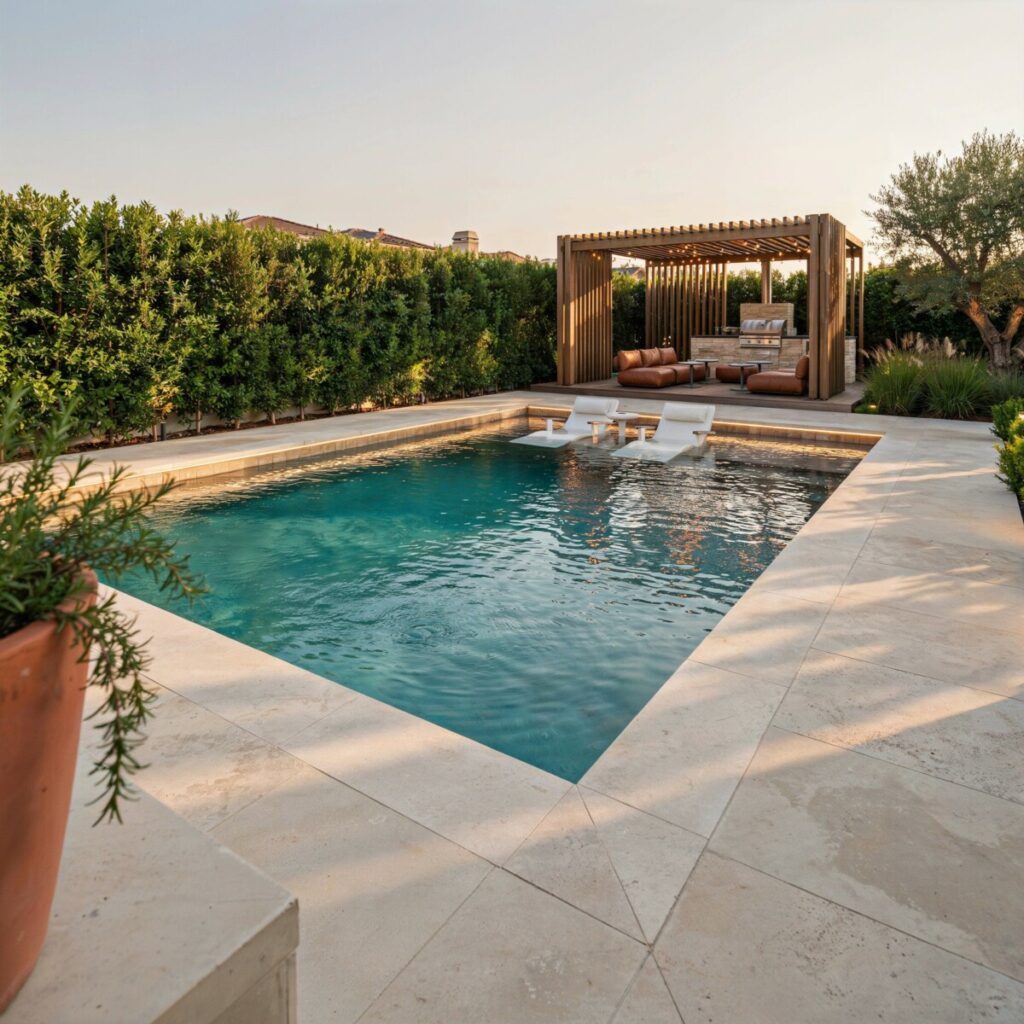
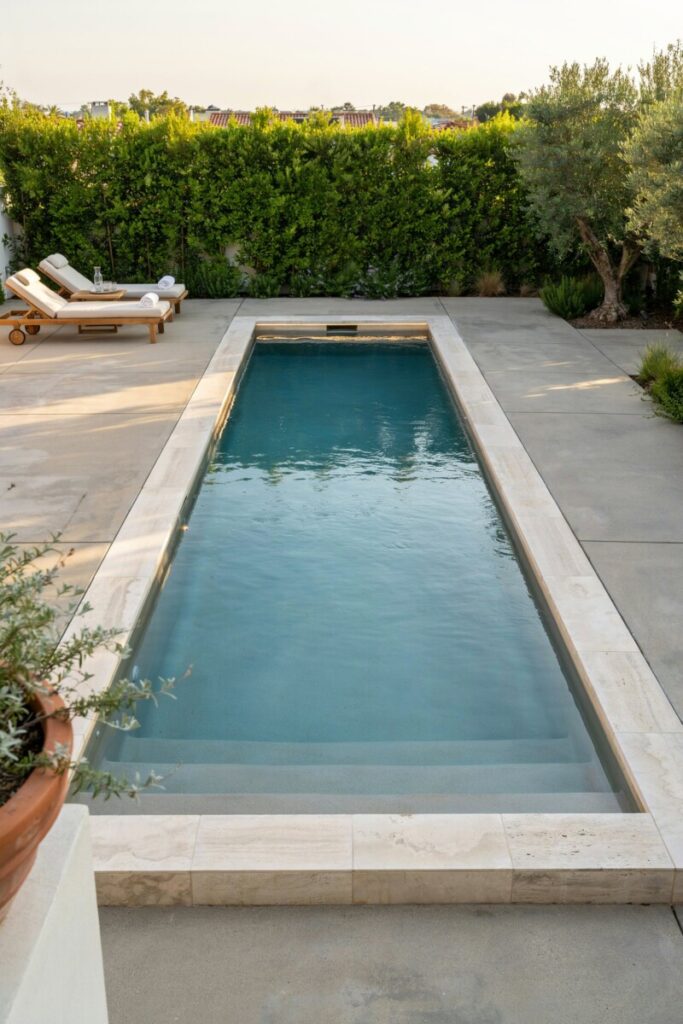
In-Ground Pools
The gold standard for permanent residential pools. In-ground pools are excavated into your yard, with the shell sitting at or below grade. They offer the most design flexibility, the highest pool resale value, and the longest lifespan — but they also come with the highest price tag and the longest installation timeline (typically 8–16 weeks for concrete, 3–6 weeks for fiberglass).
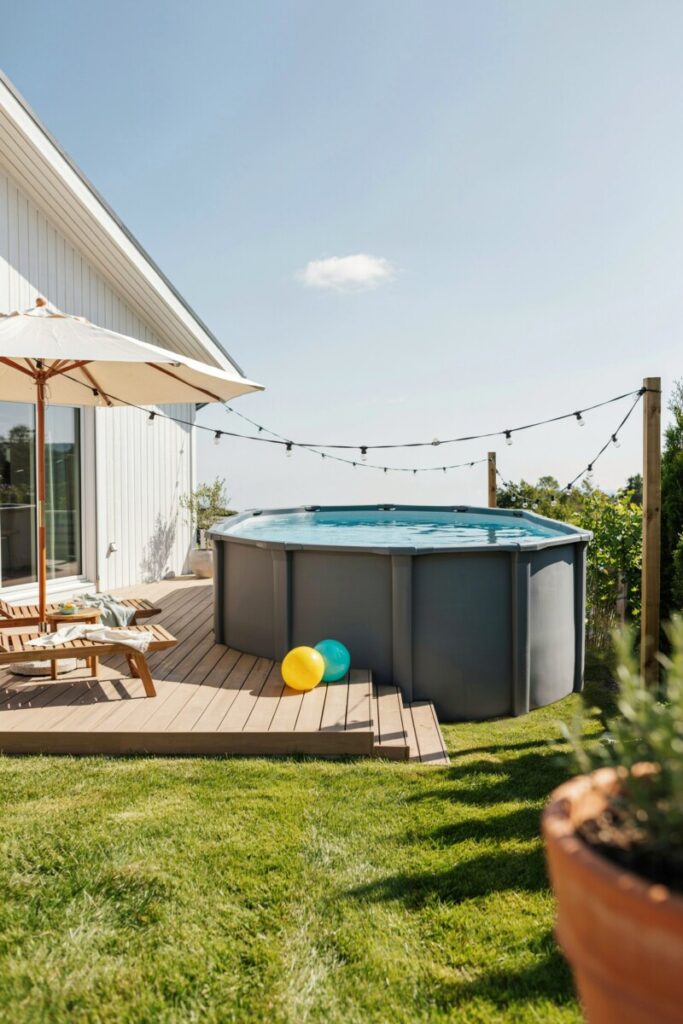
Above-Ground Pools
Above-ground pools sit entirely on the surface of your yard, supported by a frame (usually steel or resin). They’re the most budget-friendly option and can be installed in a single day. The downside? They don’t add as much to your home’s resale value, they have a shorter lifespan (7–15 years), and they’re harder to integrate into a landscaped yard.
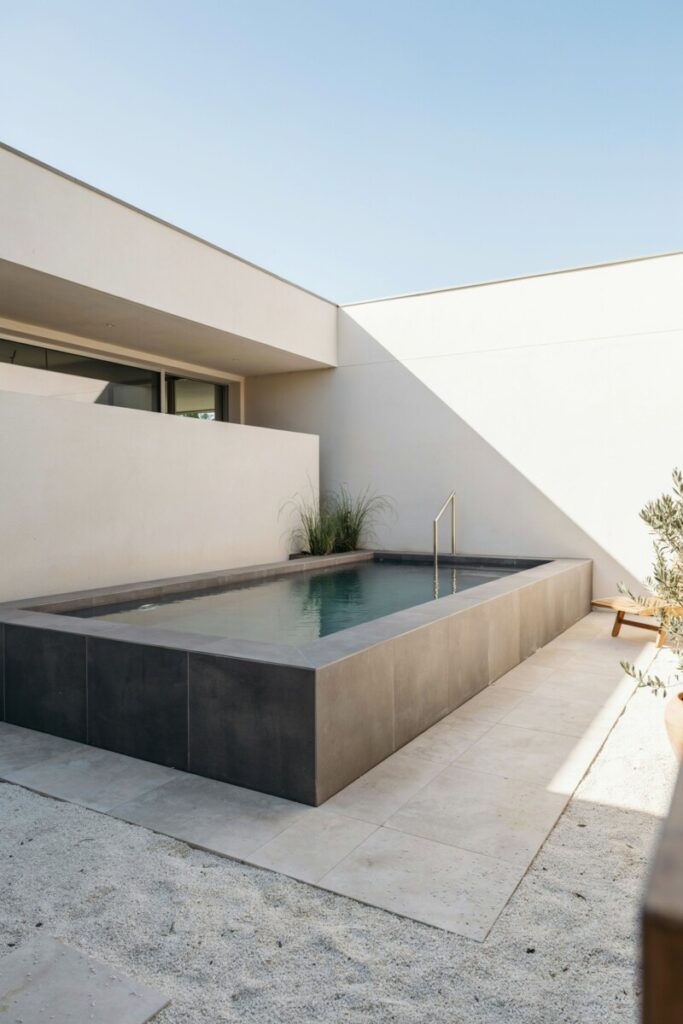
Semi In-Ground / Raised Pools
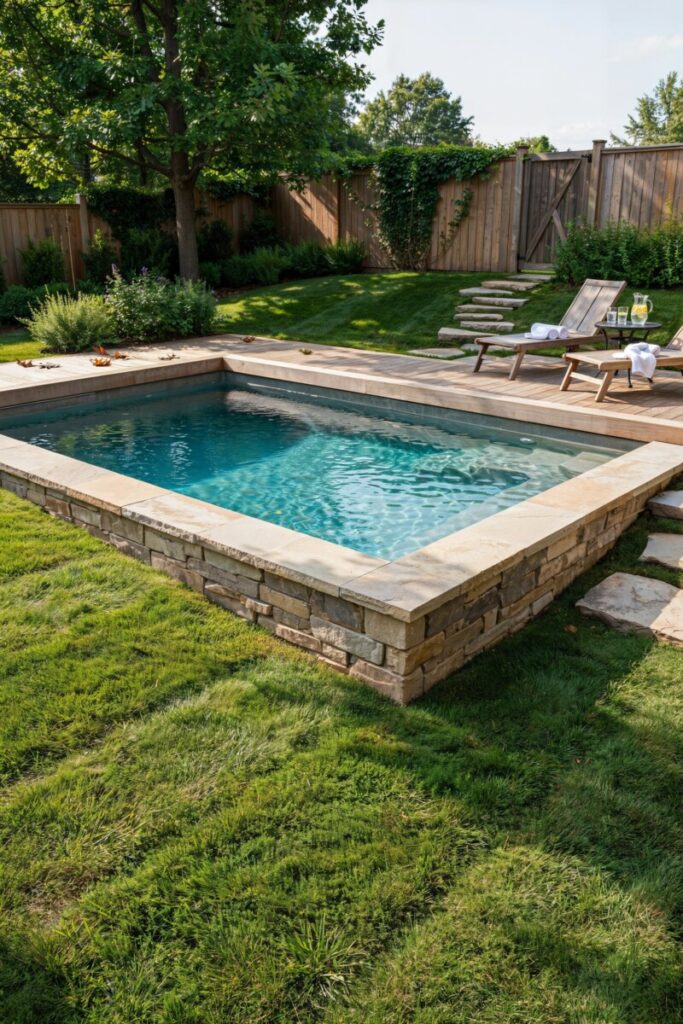
Also called “partially in-ground,” these pools are partially excavated and partially raised — often using a retaining wall or decorative stone surround. They’re a great middle ground if you have a sloped yard or want the look of an in-ground pool at a lower cost.
Inflatable Pools
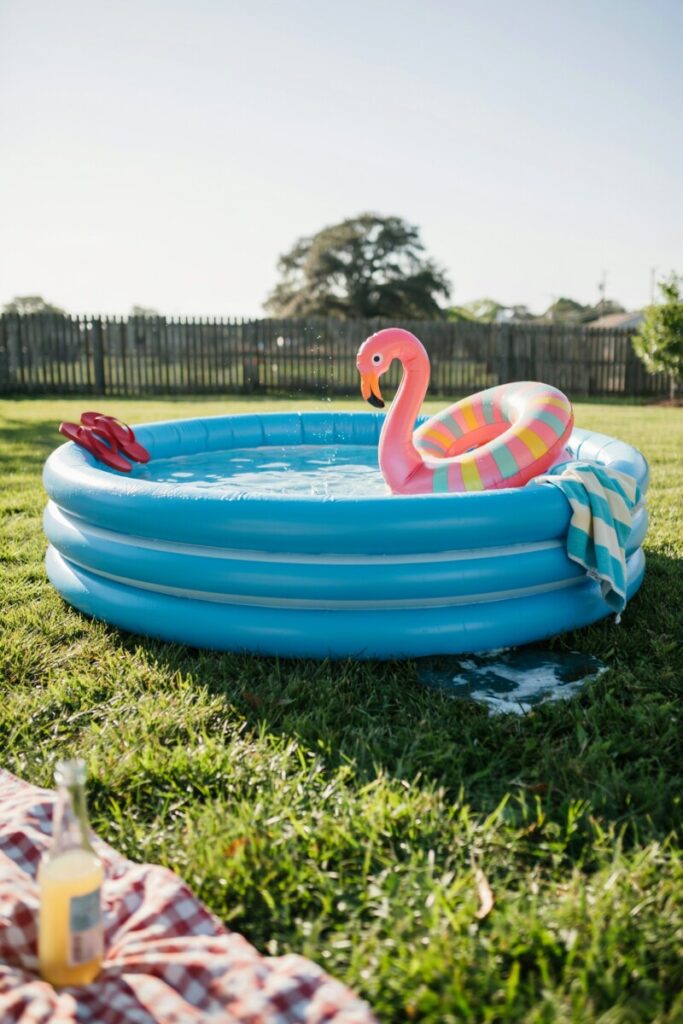
The simplest, cheapest option. Inflatable pools are temporary, sit on the ground, and are great for young kids or a quick summer cool-off. They’re not “real” pools in the construction sense, but they’re worth mentioning because they’re a common entry point for families testing the waters (pun intended).
Portable / Seasonal Pools
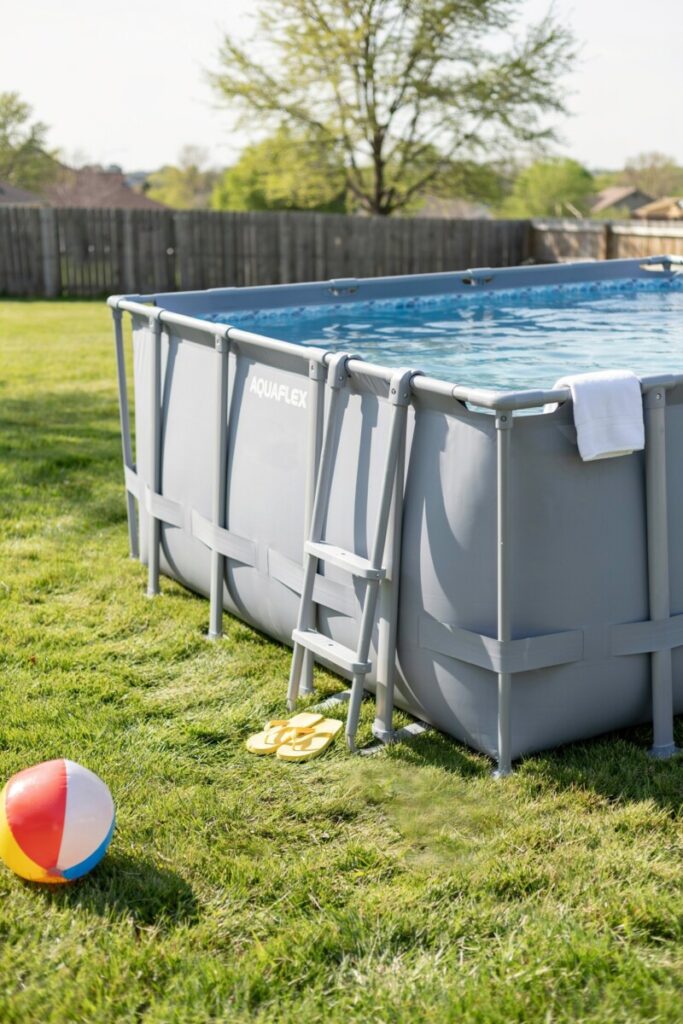
These are frame-supported pools (often with a vinyl liner) that can be assembled in spring and disassembled in fall. Think of the classic Intex or Bestway metal-frame pools. They last 2–5 seasons and cost a few hundred to a couple thousand dollars.
Deck-Mounted / On-Deck Pools
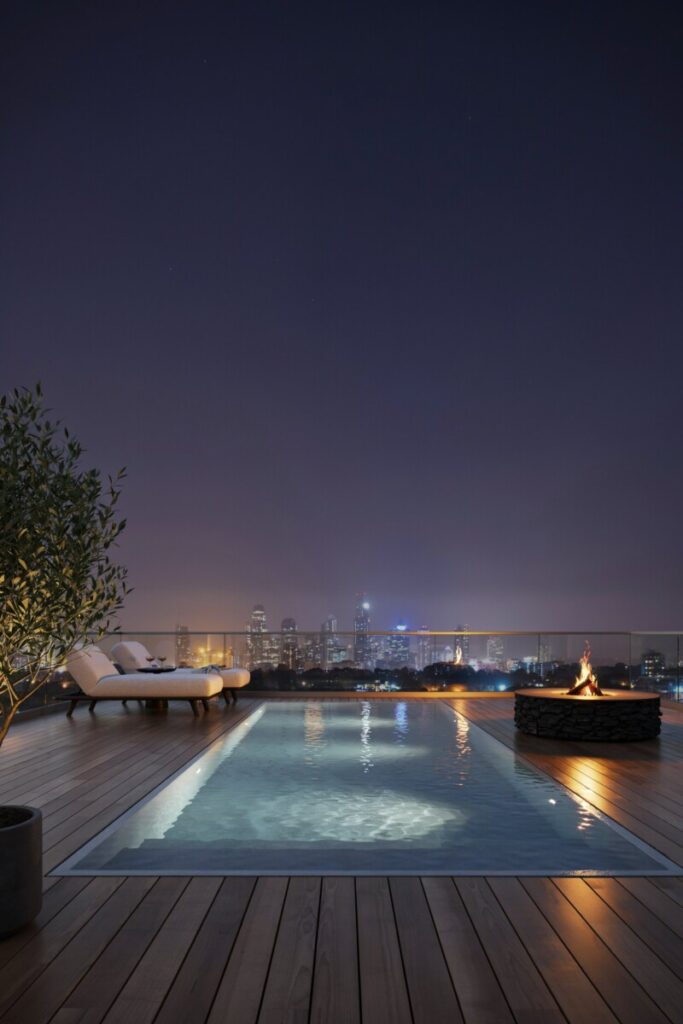
A niche category where a pool shell is installed on top of an existing deck or platform — sometimes used in rooftop or elevated installations. These require significant structural engineering.
Permanent Modular Pools
A newer category: factory-built pool shells (often fiberglass or steel-panel) that are shipped in modules and assembled on-site. They bridge the gap between above-ground affordability and in-ground permanence.
| Feature | In-Ground | Above-Ground | Semi In-Ground | Inflatable |
|---|---|---|---|---|
| Cost Range | $35K–$125K+$ | $1.5K–$15K | $10K–$25K | $50–$500 |
| Lifespan | 30–50+ years | 7–15 years | 15–30 years | 1–3 seasons |
| Install Time | 3–16 weeks | 1–3 days | 1–4 weeks | 30 minutes |
| Resale Value Impact | High | Low to None | Moderate | None |
| Customization | Very High | Low | Moderate | None |
| Best For | Long-term homeowners, entertaining, resale | Tight budgets, renters, temporary use | Sloped yards, budget in-ground alternative | Toddlers, quick summer fun |
Pools by Construction Material
Once you’ve decided on in-ground, the next big question is: what’s the pool actually made of? This is where the classic fibreglass vs. gunite pool debate lives.
Concrete / Gunite / Shotcrete Pools
The most common type of custom in-ground pool in the US. A steel-rebar framework is sprayed with a concrete mixture (gunite is dry-mix; shotcrete is wet-mix). The shell is then finished with plaster, pebble aggregate, or tile.
- Pros: Limitless shapes and sizes, extremely durable (50+ years), highest customisation, best custom pool design flexibility.
- Cons: Most expensive option, longest installation time, rough surface can scrape skin, porous surface requires more chemicals, needs resurfacing every 10–15 years ($10,000–$20,000).
Fiberglass Pools
Factory-molded shells are trucked to your site and lowered into the excavation by crane. They come in pre-set shapes and sizes.
- Pros: Fastest in-ground installation (often 2–4 weeks), smooth non-porous surface (lower chemical costs), lower long-term swimming pool maintenance, no resurfacing needed.
- Cons: Limited to manufacturer shapes/sizes (max ~40 ft long), shell can crack if the ground shifts, must be craned in (needs truck access), shipping adds cost.
Vinyl-Lined Pools
A frame (usually steel or polymer panels) is assembled in the excavation, and a custom-cut vinyl liner is fitted inside.
- Pros: Lower upfront cost than concrete or fiberglass, smooth surface, fast installation, liner can be replaced to “refresh” the pool’s look.
- Cons: Liner must be replaced every 7–12 years ($3,000–$5,000), vulnerable to tears from sharp objects or pets, limited shapes (though more flexible than fiberglass).
Steel-Walled Pools
Often used in above-ground and semi in-ground installations. Corrugated steel panels form the pool wall, with a vinyl liner on the inside.
- Pros: Strong, affordable, good for above-ground and semi in-ground applications.
- Cons: Can rust over time (especially in saltwater systems), not used for in-ground concrete-style builds.
Brick / Stone / Tile Finished Pools
These are concrete-shell pools with a premium interior finish — fully tiled, natural stone, or brick. Think luxury resort pools.
- Pros: Stunning aesthetics, extremely durable finish, no resurfacing needed.
- Cons: Very expensive ($100K+$ is common), requires specialized contractors.
Geotextile / Liner-Backed Pools
A newer, eco-oriented approach where a geotextile fabric and liner system replaces traditional concrete or vinyl. Used more in natural and semi-natural pool designs.
Pools by Shape
Your pool’s shape affects everything: how it fits in your yard, how you use it, construction cost, and even water circulation.
- Rectangular — The classic. Clean lines, ideal for lap swimming, diving, and formal landscapes. Easiest to cover with a safety cover.
- Square — A modern, minimalist take. Works well in small urban yards.
- Round — Common in above-ground pools. Efficient water circulation but less practical for laps.
- Oval — A compromise between round and rectangular, popular in above-ground and semi in-ground pools.
- L-Shaped — Creates two “zones” — one for swimming and one for lounging or a spa. Great for backyard pool ideas that combine entertainment and relaxation.
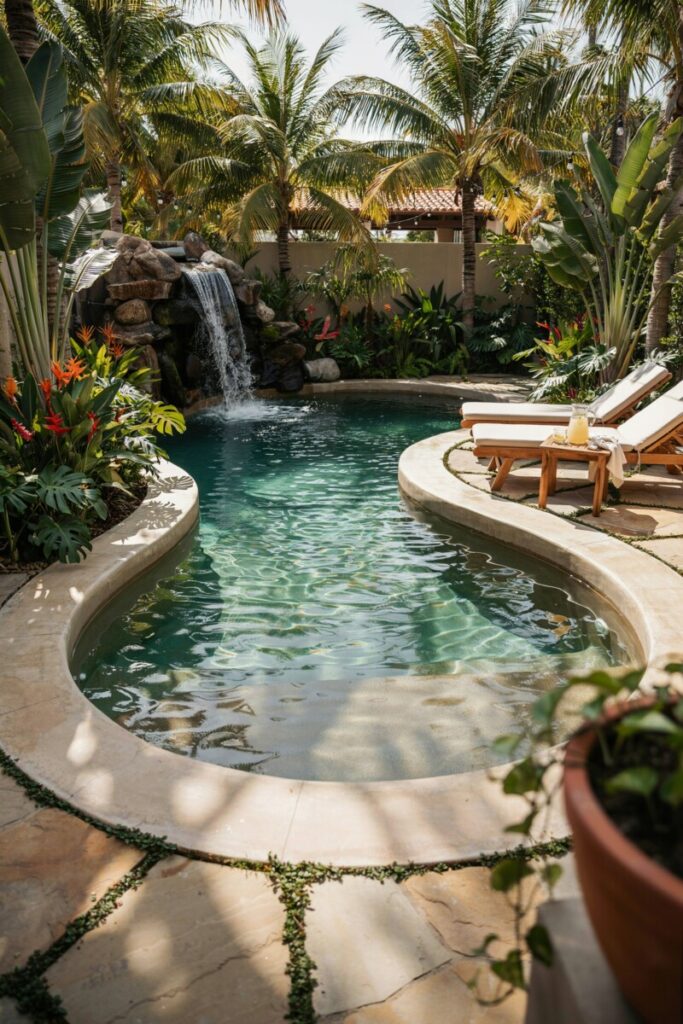
- Freeform / Naturalistic — Organic curves that mimic a natural pond or lagoon. Often paired with rock waterfalls and tropical landscaping.
- Kidney-Shaped — A single gentle curve. A classic freeform shape that works in most yards.
- Custom Shapes — Anything goes. Pools shaped like guitars, state outlines, or family initials. Concrete/gunite is the go-to material for these.
- Endless / Lap “Runner” Shape — Long and narrow (typically ≥40 ft long and ≤10 ft wide). Designed purely for exercise.
When choosing pool shapes and sizes, sketch your yard on graph paper first. A good pool contractor near me search will connect you with someone who can create a 3D rendering of how a particular shape fits your specific lot.
Pools by Purpose / Use
What do you actually want to do in the pool? This question trumps aesthetics every time.
- Lap Pools — Built for swimming laps. Long, narrow, typically 4–5 feet deep throughout. Lap pool dimensions usually run 40–75 feet long.
- Recreational Pools — The standard family pool. Mix of shallow and deep ends, room for games and lounging.
- Family / Play Pools — Emphasis on a large shallow end, built-in benches, and kid-friendly features like splash pads.
- Spa Pools / Hot Tubs — Heated to 100–104°F, outfitted with jets. Usually seats 4–8 people.
- Therapy Pools — Warm water, handrails, graduated depths, and sometimes underwater treadmills. Used for physical rehabilitation.
- Diving Pools — Require a minimum depth of 8 feet (and often 9+ feet) in the diving area, with specific slope transitions.
- Wading Pools — Very shallow (12–24 inches). Designed for toddlers or as a cool-off space.
- Sports Pools — Designed for volleyball, basketball, or other water sports. Feature a deep center with shallow ends on both sides.
- Water-Feature Pools — The pool is as much a visual element as a swimming space. Think sheer-descent waterfalls, grottos, and fire features.
- Plunge Pools — Small, deep pools (typically 10×16 feet or smaller) designed for cooling off, not swimming. Great for the best pool for small backyard situations.
- Spool (Small Pool + Spa Combo) — A hybrid: large enough to wade or soak in, with spa jets and heating. Typically 10–16 feet long.
- Lap + Spa Combination Pools — A lap pool with an attached spa or hot tub section.
- Competition Pools — Meet specific dimensions (25 meters or 50 meters) with lane markers and starting blocks. Rare in residential settings.
- Recreational Theme Pools — Pools designed around a theme: tropical lagoon, Roman bath, modern infinity edge, etc.
Plunge pool vs. spool — both are small, but a plunge pool is deeper and unheated (just for cooling off), while a spool is shallower, heated, and jetted (for soaking like a spa).
Pools by Heating Method
Heating extends your swim season — in many climates, it’s the difference between a 3-month pool and a 7-month pool.
- Unheated — No heater installed. Fine in South Florida or Southern California. Not practical in most of the US.
- Solar-Heated — Panels on your roof or yard heat water as it circulates through them. Lowest operating cost but dependent on sunshine. Energy-efficient pool heating at its finest.
- Gas-Heated — Natural gas or propane heater. Heats fast (can raise temperature 1–2°F per hour), works in any weather. Higher operating cost.
- Heat-Pump Heated — Uses electricity to extract heat from the surrounding air and transfer it to the pool water. Very efficient in warm climates (works best above 50°F ambient). Lower operating cost than gas, slower to heat.
- Saltwater-Heated Systems — Not a separate heating method, but worth noting: saltwater pools can use any of the above heaters. The “saltwater” refers to sanitation, not temperature. (This is a common misconception.)
| Heating Method | Equipment Cost | Annual Operating Cost | Heat-Up Speed |
|---|---|---|---|
| Solar | $3,000–$6,000 | $0–$200 | Slow (days) |
| Gas | $1,500–$3,500 | $1,200–$3,600 | Fast (hours) |
| Heat Pump | $2,500–$5,000 | $600–$1,800 | Moderate (hours to days) |
Indoor vs. Outdoor & Climate Considerations
Indoor Pools
Enclosed within a structure. Require a dedicated dehumidification system, vapor barrier, and structural ventilation. Costs are 2–3× higher than an equivalent outdoor pool due to the building and HVAC requirements.
Outdoor Pools
The vast majority of residential pools. Subject to seasonal limitations unless heated and/or covered.
Year-Round Pools
Typically heated (gas or heat pump) and may include an automatic safety cover or enclosure. In mild climates (USDA Zones 8–10), an unheated pool can be year-round.
Covered / Retractable-Roof Pools
A retractable enclosure allows you to “open” or “close” the pool area. Expensive ($30K–$100K+$ for the enclosure alone) but dramatically extends the swim season in northern climates.
Screened Pools / Enclosures
Common in Florida and the Gulf Coast to keep out insects, leaves, and debris. Screen enclosures (“screened lanais”) cost \8,000$–25,000$ depending on size.
Pools by Water Flow / Edge Design
This category is mostly about aesthetics and hydraulics — how water moves through and over the pool’s edges.
- Overflow (Spillover) Pools — Water flows over one or more edges into a catch basin, creating a mirror-like surface. Also called “infinity edge” or “vanishing edge” pools when the overflow side faces a view.
- Skimmer Pools — The standard setup. Water level sits a few inches below the deck edge, and surface water is drawn into skimmer baskets for filtration.
- In-Slab / Perimeter Overflow Systems — A slot drain runs around the entire perimeter of the pool, creating a completely flush water-to-deck surface. Premium look, premium price.
- Directional Flow / Training Pools — Water is pushed in a single direction by jets, creating a current you swim against. Used in endless pools and training environments.
- Current / “Endless” Pools — A proprietary-style system that generates an adjustable current in a compact pool (often 8×15 feet). You swim in place against the current. Ideal for exercise in small spaces.
Pools by Sanitation System
This is where the saltwater vs. chlorine pool debate comes alive. Every pool needs a way to kill bacteria and algae. Here are the options:
- Chlorinated Pools — The traditional method. Liquid chlorine, chlorine tablets (trichlor), or granular chlorine (cal-hypo) are added manually or via an automated feeder. Effective, well-understood, but can cause skin/eye irritation at high levels.
- Saltwater Pools — A salt chlorine generator (SCG) converts dissolved salt into chlorine on-site. The water still contains chlorine — just not added from a bottle. Softer feel, lower day-to-day maintenance, but the SCG cell must be replaced every 3–5 years ($400–$800).
- Bromine Pools — Similar to chlorine but more stable in hot water. Primarily used in spas and hot tubs.
- Mineral / Silver / Copper Ion Pools — Mineral cartridges release silver (bactericide) and copper (algaecide) ions into the water. Used as a supplement to reduced chlorine levels.
- UV-Treated Pools — Ultraviolet light kills bacteria and viruses as water passes through the UV chamber. Must be paired with a residual sanitizer (low chlorine or bromine) since UV only treats water in the chamber, not in the pool itself.
- Ozonated Pools — An ozone generator injects ozone gas (O3) into the water, which is a powerful oxidizer. Like UV, it must be paired with a residual sanitizer.
- Electrolytic / Advanced Hybrid Systems — Combine multiple technologies (e.g., salt chlorine generation + UV + copper ionization) for ultra-low chlorine levels.
- Freshwater / Low-Chlorine Systems — A marketing term for pools that use one or more of the above technologies to keep chlorine levels below 1.0 ppm. The CDC still recommends maintaining at least 1.0 ppm free chlorine for public health safety.
Pools by Filtration System
The filter removes physical debris (dirt, leaves, insects, algae particles) from the water. It works with your sanitation system but serves a different purpose.
- Sand Filtration — Water passes through a bed of special filter sand. Catches particles down to ~20 microns. Least expensive, easiest to maintain (backwash every few weeks), but least fine filtration.
- Cartridge Filtration — Water passes through a pleated fabric cartridge. Catches particles down to ~10 microns. No backwashing needed — just remove and hose off the cartridge. Good balance of cost and performance.
- Diatomaceous Earth (DE) Filtration — A grid coated in DE powder (fossilized algae). Catches particles down to ~3 microns (the finest filtration available). Requires periodic backwashing and DE recharge. Best water clarity but most maintenance-intensive.
- Media Filtration — Uses alternative media (recycled glass, zeolite) instead of sand. Offers finer filtration than sand (down to ~5 microns with glass media) with similar maintenance ease.
- Salt System Filtration — Not a separate filter type. Saltwater pools use the same filter options as any other pool. (Another common misconception worth clearing up.)
When researching the best pool filter type, most contractors recommend cartridge for ease of use or DE for water clarity. Sand is best for tight budgets.
Entry Styles & Add-On Features
These are the details that make your pool feel personal.
Entry Styles
- Steps Entry — Traditional built-in steps (full-width “Roman” steps or corner steps).
- Ladder Entry — Metal or resin ladder, common in above-ground pools.
- Ramp Entry — ADA-accessible gradual ramp. Requires more space.
- Beach / Zero-Entry — A gradual slope from the deck into the water, like walking into the ocean. Luxurious but takes up significant pool square footage.
- Raised Spillover Edge — A raised spa or shelf spills water into the main pool.
- Plunge Pool Entry — Often a full-width step or bench entry due to the pool’s compact size.
Popular Add-On Features
- Waterfalls — Rock, sheer-descent, or natural stone cascades.
- Bubblers / Fountains — In-floor or deck-mounted water jets for visual interest.
- Sheer Descent / Laminar Jets — Sheet-like or glass-like arcs of water. Laminar jets can be lit with fiber optics for nighttime drama.
- Tanning Ledges / Sun Shelves — A shallow platform (1–6 inches of water) for lounge chairs. Extremely popular in modern designs.
- Slides — From small kids’ slides to full-size boulder slides.
- In-Floor Cleaning Nozzles — Pop-up jets that sweep debris toward the main drain. Eliminates the need for a robotic cleaner.
- Spa Jets — Adjustable hydrotherapy jets, typically in an attached spa or spool section.
How to Choose: A Quick Decision Framework
Use this table to narrow down your options before calling a contractor:
| Your Priority | Best Pool Options | Watch Out For |
|---|---|---|
| Tight Budget (<$20K) | Above-ground, inflatable, portable | Lower resale value, shorter lifespan |
| Small Backyard | Plunge pool, spool, endless pool, fiberglass (compact models) | Concrete custom builds eat up yard space fast |
| Exercise / Lap Swimming | Lap pool (40–75 ft), endless/current pool, sports pool | Make sure lap pool dimensions fit your lot length |
| Family with Kids | Recreational pool, family/play pool with large shallow end | Avoid diving pools — unsafe for young children |
| Low Maintenance | Fiberglass shell + saltwater system + cartridge filter | Concrete pools need more chemicals and resurfacing |
| Maximum Resale Value | In-ground concrete or fiberglass, rectangular or freeform, well-landscaped | Above-ground pools can actually hurt resale in some markets |
| Year-Round Swimming | Heated pool (gas or heat pump) + automatic cover or enclosure | Operating costs add $1,500–$4,000/year |
| Luxury / Entertaining | Freeform concrete pool + spa + water features + lighting | Budget \ $80K–$150K+$ for a full outdoor living setup |
Your 5-Step Decision Checklist
- Set your total budget — including a 15–20% contingency for unexpected costs (rock excavation, utility relocations, permit fees).
- Define your primary use — Exercise? Kids? Entertaining? Relaxation? This dictates shape and purpose.
- Measure your usable yard — Subtract setback requirements (check your local zoning — most municipalities require 5–10 ft setbacks from property lines).
- Research your climate — This determines heating needs, season length, and whether an enclosure makes sense.
- Get 3 quotes — Search for a pool contractor near me and compare detailed, line-item estimates. Never choose on price alone — check licenses, insurance, and references.
Conclusion: It’s a Combination, Not a Single Choice
Here’s the key takeaway: when people search for “types of swimming pools,” they’re usually thinking about one category — like in-ground vs. above-ground, or concrete vs. fiberglass. But your actual pool project is a combination of choices across every category in this guide.
A “rectangular, in-ground, gunite pool with a saltwater system, heat pump, cartridge filter, zero-entry beach shelf, and sheer-descent waterfall” is a specific pool designed for a specific homeowner, a specific yard, and a specific budget. That’s the level of detail you’ll need to think about.
The good news? You don’t have to figure it all out alone. A reputable, licensed pool contractor will walk you through each of these decisions, help you understand the trade-offs, and design a pool that fits your life — not just your yard.
Ready to take the next step? Get a free consultation and detailed quote from a licensed pool contractor in your area. Bring this guide with you — you’ll ask better questions, spot red flags faster, and end up with a pool you’ll love for decades.
This guide is for educational purposes. Always consult a licensed pool contractor and your local building department before beginning any pool construction project. Pool safety guidelines referenced from the [CDC Healthy Swimming program](https://www.cdc.gov/healthy(opens in new tab) Swimming/) and industry standards from the Pool & Hot Tub Alliance (PHTA)(opens in new tab).