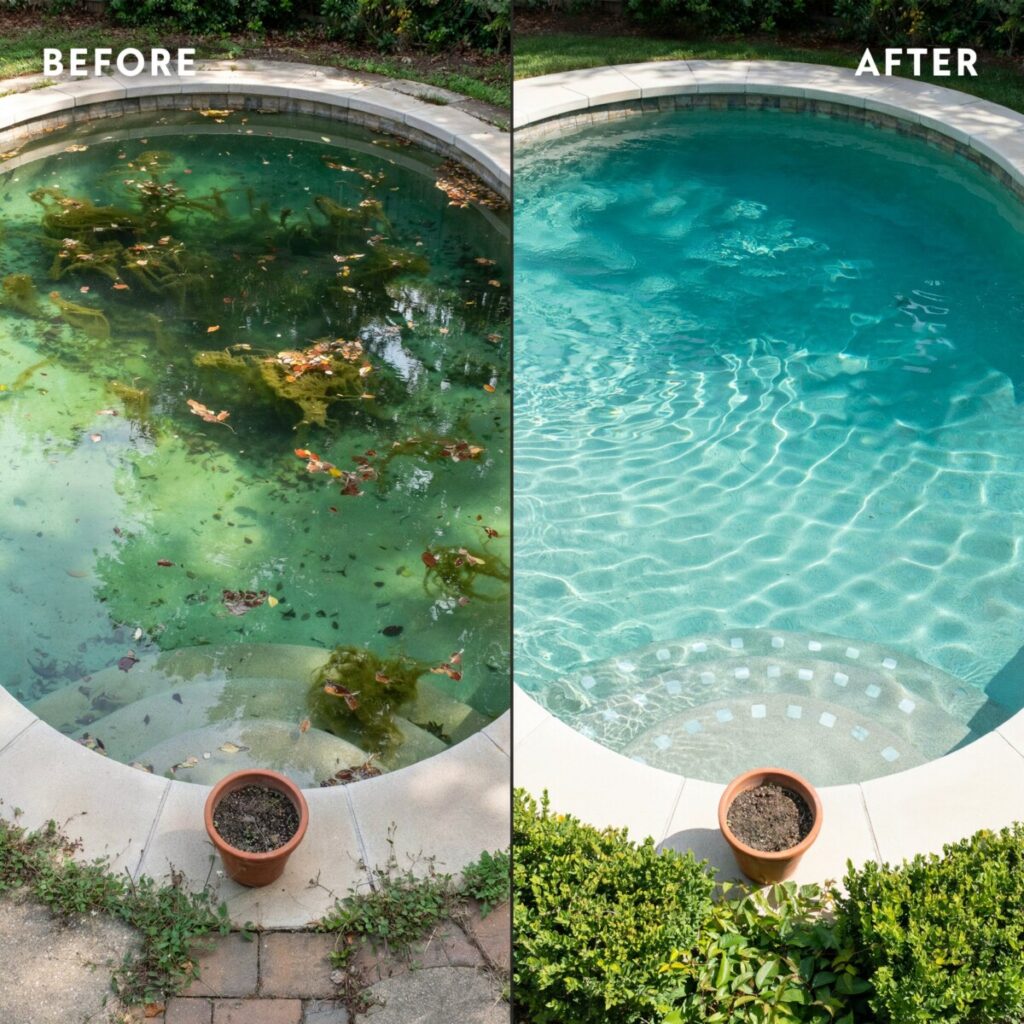
Waking up to a green backyard pool is a weekend nightmare—but with the right steps, you can turn it from slimy to sparkling in a few days. Imagine waking up on a Saturday morning, ready to host a summer barbecue, only to look out the window and see a murky, swamp-like pond instead of your pristine swimming pool. It’s a frustrating scenario for any U.S. homeowner, but don’t cancel those invitations just yet. A green pool doesn’t mean you need to drain it and start over.
Whether you are dealing with a sudden algae bloom after a heavy rainstorm or returning from a vacation to find your water chemistry has crashed, this guide is your ultimate roadmap to successful pool algae removal and recovery. We will walk you through exactly how to diagnose the problem, safely execute a DIY pool algae treatment, and establish a rock-solid pool maintenance checklist to keep the water crystal clear. Grab your test kit and your favorite pool brush; it’s time to take your pool from green to clean.
Why Your Pool Turned Green (and Why It Matters)
To successfully get rid of algae in pool environments, you first need to understand how it got there in the first place. Algae are microscopic, plant-like organisms that thrive in water when the environment is just right. Unfortunately, a poorly maintained pool is the perfect breeding ground.
The most common culprits behind a green pool treatment emergency include poor water circulation, inadequate chlorine levels, and high phosphate levels (which act as an all-you-can-eat buffet for algae). Warm weather is another major factor; if you live in sun-drenched states like Florida, Texas, or Arizona, the combination of high heat and intense UV rays can cause chlorine to dissipate rapidly, leaving your water vulnerable. Additionally, a severe pH imbalance can render your existing chlorine completely ineffective, even if the levels look okay on a test strip.
Beyond being an eyesore that ruins your backyard aesthetic, algae can cause real problems. It creates a slippery, hazardous environment around the pool floor and steps, increasing the risk of slips and falls. Furthermore, an algae-filled pool can harbor harmful bacteria, making it unsafe for swimming. Understanding the common pool algae types—primarily green algae, mustard algae, and black algae—is the first step toward reclaiming your backyard oasis.
How to Diagnose Pool Algae (Green, Mustard, and Black)
Before you start dumping chemicals into the water, you need to identify exactly what you are fighting. Different pool algae types require slightly different approaches.
- Green Algae: The most common and easiest to treat. It floats in the water or clings to the walls and floor, turning the water a cloudy, pea-green color. It feels slimy to the touch and usually brushes off relatively easily.
- Mustard (Yellow) Algae: This type looks like dirt or sand settled on the pool floor or in the shaded corners of the steps. It is highly resistant to normal chlorine levels and will quickly return if not treated aggressively.
- Black Algae (Blackspot): The toughest of them all. It appears as small, dark green or black spots with a protective, crusty layer. It roots into the plaster or grout of the pool, making it incredibly difficult to scrub away.
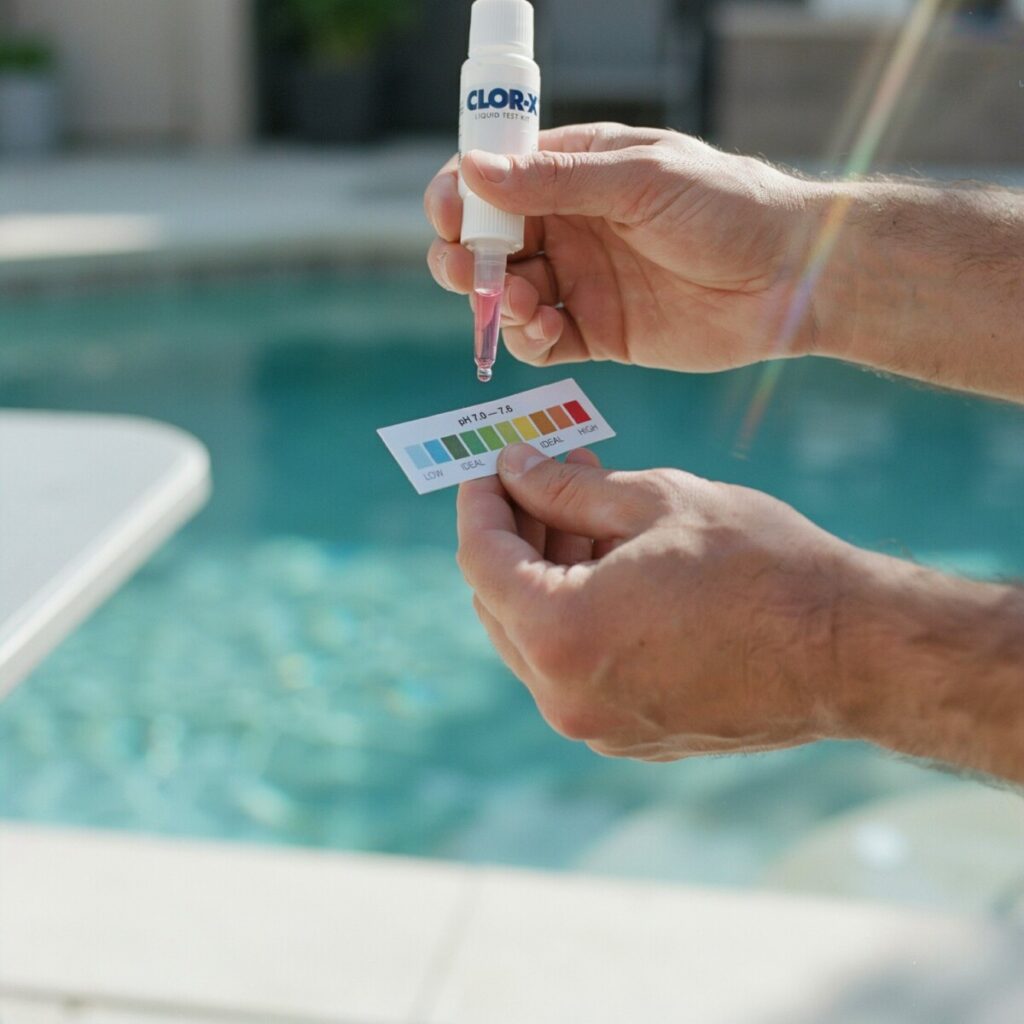
Next, use a reliable liquid drop test kit to check your pool water chemistry. You need to measure your free chlorine, pH, combined chlorine, and total alkalinity. If the water is completely opaque, or if you suspect severe black algae infestations deep in the plaster, it might be time to consider when to call a pool service rather than tackling it yourself.
What You Need Before You Start (Safety and Tools)
Safety and preparation are non-negotiable when handling pool chemicals. Always wear protective gloves and safety goggles when handling shock and algaecides. Never mix different chemicals together, and always add chemicals to water—never add water to chemicals. Store all chemicals in a cool, dry place, securely away from children and pets. For detailed guidelines, always refer to a trusted resource on pool chemical safety.
Before starting your treatment, do a quick equipment check. Ensure your pump is running smoothly, your skimmer baskets are empty, and your filter is clean. You will also need to understand the difference between your regular weekly chlorine (like trichlor tablets) and pool shock treatment. Shock is a highly concentrated, fast-acting oxidizer designed to rapidly spike your chlorine levels and destroy organic contaminants. Make sure you have enough calcium hypochlorite (cal-hypo) or liquid chlorine shock on hand to complete the entire process.
Step-by-Step: How to Remove Algae from Your Pool
Brush and Break Up the Algae
Your first physical task is to brush the entire interior surface of the pool. Use a sturdy pool brush (stainless steel bristles for concrete/plaster pools, and nylon bristles for vinyl or fiberglass) to vigorously scrub the walls, floor, and steps.
Brushing breaks up the algae’s protective outer layer and suspends it in the water, making it much easier for the chlorine to attack and kill it. Don’t skip the corners, behind the ladders, or the light niches—algae love to hide in low-circulation areas. Spend at least 30 to 45 minutes on this step; the more thorough you are now, the faster the green pool treatment will work.
Test and Balance Water Chemistry
Shock is only effective if your pool water chemistry is properly balanced. If your pH is too high or too low, the chlorine won’t work efficiently.
Test your water and adjust the levels to these ideal target ranges:
- pH: 7.2–7.6 (This is the sweet spot for maximum chlorine activity).
- Total Alkalinity: 80–120 ppm.
- Cyanuric Acid (CYA): 30–50 ppm (If your CYA is over 100 ppm, it will “lock” your chlorine, and you may need to partially drain and refill the pool).
Adjust the pH using a pH decreaser (muriatic acid or sodium bisulfate) or a pH increaser (sodium carbonate) as needed. Wait a few hours for the water to circulate before moving to the next step.
Shock Your Pool Correctly
Now it is time to learn how to shock a pool properly. “Shocking” means adding a massive dose of chlorine to reach what is called breakpoint chlorination. This is the point where there is enough free chlorine to completely destroy all the algae, combined chlorine (chloramines), and organic waste in the water.
For a heavily green pool, a standard weekly shock dose won’t cut it. You need to raise your free chlorine levels into the 10–30 ppm range. You can calculate your required dose using this general formula:
Bags of Shock=10,000×ppm increase per bagTarget ppm×Pool Gallons
Illustrative Example: Let’s say you have an average 15,000-gallon pool with heavy green algae. If you are using a standard calcium hypochlorite shock (which typically contains 65%–73% available chlorine), one 1-pound bag usually raises the chlorine level by about 5.5 ppm in 10,000 gallons. To reach a heavy shock level of roughly 20 ppm in a 15,000-gallon pool, you would need to use approximately 4 to 5 pounds of cal-hypo shock. Always read the specific manufacturer’s label for exact dosing instructions.
Pro Tip: Add the shock at dusk or in the evening. The sun’s UV rays burn off unstabilized chlorine rapidly, so shocking at night gives the chemical 8 to 12 hours of darkness to do its heavy lifting.
Run and Clean Your Filter
If you’re wondering how long to run pool pump after shocking: leave it running continuously (24/7) until the water clears. The typical baseline for pool pump operation is 8–12 hours a day, but when fighting an algae bloom, constant circulation is mandatory to push the dead algae through the filter.
As the filter traps the dead algae, the pressure will rise. You will need to monitor your filter closely and perform pool filter cleaning and backwash routines frequently:
- Sand Filters: Backwash when the pressure gauge reads 8–10 psi above the normal, clean operating pressure.
- DE (Diatomaceous Earth) Filters: Backwash similarly to sand filters, and remember to add fresh DE powder afterward.
- Cartridge Filters: You cannot backwash these. Instead, you will need to remove the cartridges and hose them off thoroughly, potentially multiple times a day during a severe algae bloom.
Use Algaecide and Vacuuming Tips
After the pool has been shocked and the water begins to turn from green to a cloudy, milky blue, the algae is dead. However, dead algae and stubborn spores might still linger. This is where the best algaecide for pools comes in.
Use a polyquat-based or copper-based algaecide as a backup killer. Caution: Copper-based algaecides can stain pool surfaces if the pH drops too low, so use them carefully and ensure your pH is balanced. Quat-based algaecides are excellent for general maintenance and preventing future blooms without the staining risk.
Next, it is time to clean up the mess. If the dead algae has settled on the floor, use your pool vacuum. Pool vacuuming tips: If the algae layer is very thick, bypass the filter and set your multiport valve to “Waste” to vacuum the debris directly out of the pool. This prevents your filter from clogging instantly. (Note: You will need to add fresh water to the pool to replace what you pumped out).
If the water is still cloudy after vacuuming, use a pool clarifier to coagulate the tiny, microscopic dead particles so your filter can catch them, effectively teaching you how to clear cloudy pool water.
Final Testing and Maintenance
Once the water is sparkling clear, test the water again. Your free chlorine should be dropping back down to the ideal 1–3 ppm range for regular swimming. Ensure your pH and alkalinity are still balanced, as the shocking process can sometimes throw these numbers out of whack. Give the pool one final, light brushing and vacuuming, and you are ready to swim!
Troubleshooting Stubborn Algae
Sometimes, a standard green pool treatment isn’t enough. If your pool is still stubbornly green after 48–72 hours of continuous pumping and heavy shocking, you likely have an underlying issue. First, check for filter clogs; a dirty filter simply recirculates dead algae back into the pool. Deep clean your filter media or consider replacing old cartridges.
If you are dealing with mustard algae, you will need to use a specialized sodium bromide treatment alongside your shock, as mustard algae is notoriously resilient to standard chlorine levels. For black algae, you must aggressively scrub the spots with a stainless-steel brush or even a pumice stone to break the protective crust before applying a dedicated black algaecide or rubbing a chlorine tablet directly onto the spots.
If your pool surfaces are heavily stained from metals or prolonged algae sit-times, you may need to look into pool stain removal techniques, such as an ascorbic acid treatment. In the most extreme cases—where the water is completely black, the plaster is deeply compromised, and chemical after chemical fails—the absolute last resort is to drain the pool and perform an acid wash. However, draining a pool carries severe structural risks (such as the pool “popping” out of the ground due to hydrostatic pressure) and should only be done by a licensed professional.
Preventing Algae — A Simple Maintenance Plan
The secret to a pristine pool isn’t just knowing how to get rid of algae in a pool; it’s ensuring it never comes back. Implementing a strict pool maintenance checklist is your best defense.
Your Weekly Pool Maintenance Checklist:
- Test Water: Check free chlorine (target 1–3 ppm) and pH (7.2–7.6) at least twice a week.
- Shock Weekly: Add a standard maintenance dose of shock every week, especially during peak summer heat.
- Run the Pump: Ensure your pump runs for at least 8–12 hours daily to maintain proper circulation.
- Brush and Skim: Brush the walls and floor once a week to dislodge early algae spores, and skim the surface daily.
- Manage Phosphates: If your phosphate levels are high (above 500 ppb), use a phosphate remover for pools to eliminate the algae’s food source.
Seasonal care is equally critical. During your spring opening, shock the pool heavily to kill any winter spores. In the peak of summer, monitor chlorine levels daily, as heat and heavy bather loads deplete sanitizer fast. Finally, proper pool winterizing and seasonal care—including using a winter algaecide and a tight, opaque pool cover—will save you from opening a swamp next April.
When to Call a Pool Professional
While this DIY pool algae treatment works for the vast majority of backyard pools, there is no shame in calling for backup. If you are dealing with severe black algae, broken underground plumbing, or if you simply don’t have the time to babysit the filter, search online for a “certified pool service near me” to get expert help.
Ready to reclaim your backyard? Grab your brush, follow these steps, and watch your pool transform from green to clean! Have you successfully rescued a swampy pool, or do you have questions about pool water chemistry? Share your algae stories and tips in the comments below.