Across the United States, more homeowners are making the switch to saltwater pools in search of softer water, lower chemical exposure, and a more enjoyable backyard swimming experience. The appeal is easy to understand—saltwater pools are often marketed as a cheaper, easier-to-maintain alternative to traditional chlorine pools. But before you schedule a consultation with a local pool contractor, there’s an important question that deserves a real answer: how much does a saltwater pool system really cost, and what expenses might catch you off guard?
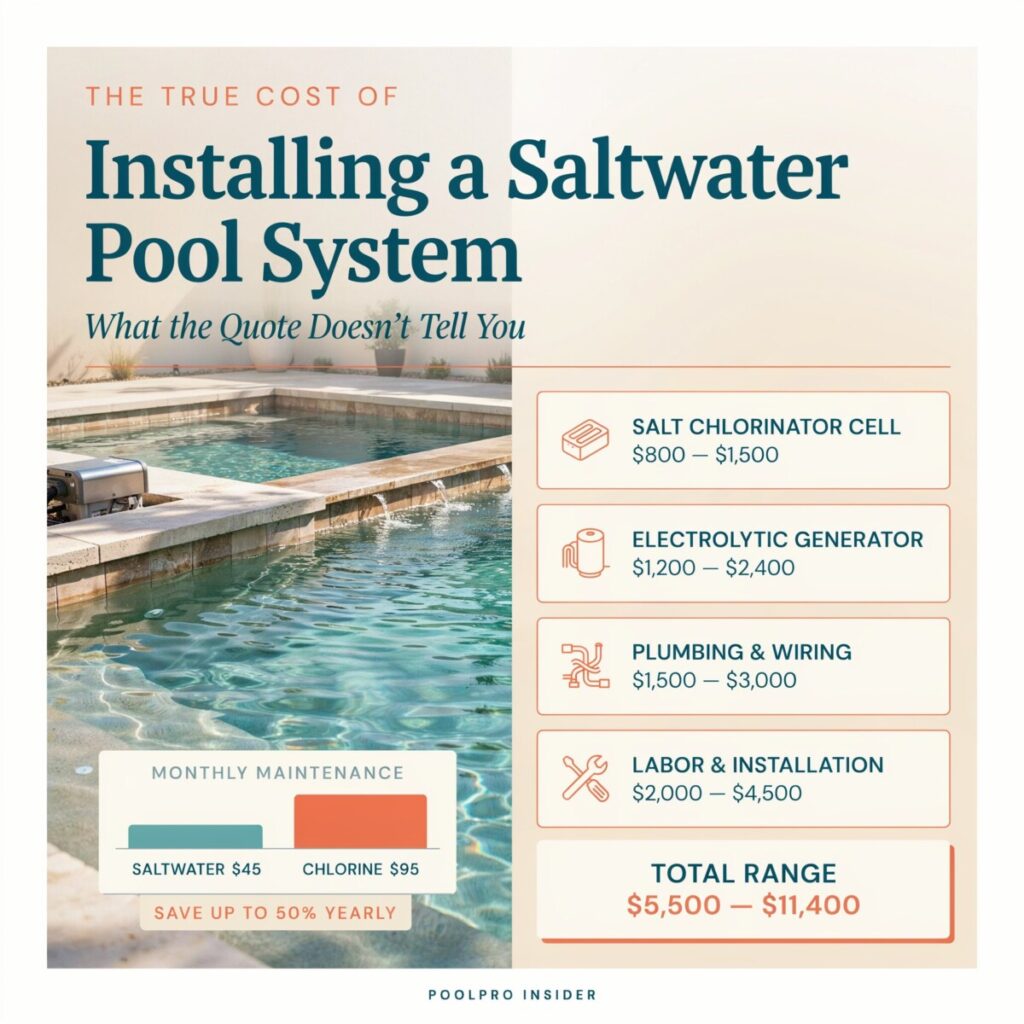
The saltwater pool system cost goes far beyond the sticker price of the generator unit itself. Homeowners must account for installation labor, electrical work, potential equipment upgrades, ongoing salt and chemical purchases, and the inevitable replacement of core components like the salt cell. This guide breaks down every cost factor—upfront and long-term—so you can make a confident, fully informed decision about whether a saltwater pool is the right investment for your home.
What Is a Saltwater Pool System?
Before diving into pricing, it helps to understand exactly what you’re paying for. A saltwater pool system is not a completely chlorine-free pool. Instead, it uses a device called a salt chlorine generator (sometimes called a salt chlorinator) to convert dissolved salt in the water into chlorine through a process called electrolysis .
Here’s how the system works:
- Salt is added to the pool water at a concentration of roughly 2,500 to 4,000 parts per million—about one-tenth the salinity of seawater .
- The salt cell, a key component plumbed into the filtration system, uses electricity to break apart salt molecules and generate chlorine naturally.
- The pump and filtration system circulate water through the salt cell, distributing freshly generated chlorine throughout the pool.
- A control board monitors chlorine output and adjusts it based on the pool’s needs.
The result is water that stays consistently sanitized without the homeowner having to manually add liquid chlorine or chlorine tablets as frequently. However, this convenience comes with specific equipment requirements that directly influence the saltwater pool installation cost.
Average Cost to Install a Saltwater Pool System
The total price you pay depends heavily on whether you’re building a brand-new pool or converting an existing one. Here’s a look at the typical US pricing ranges in 2026.
New Saltwater Pool Installation
Installing a brand-new inground saltwater pool costs an average of around $25,000, with most homeowners spending between $12,000 and $38,500 depending on pool size, materials, and location . For comparison, that’s only slightly more than a comparable chlorine pool, since the concrete, plumbing, and decking costs are largely the same—the premium comes from the salt chlorine generator and related components.
Pool Conversion from Chlorine to Saltwater
If you already own a chlorine pool, converting it to saltwater is significantly less expensive. Most saltwater pool conversion cost estimates fall between $1,500 and $2,500 for a professionally installed system . Larger pools (50,000 gallons or more) can push that number closer to $3,000 when accounting for the higher-output generator and additional salt .
Inground Saltwater Pool Cost vs. Above Ground Saltwater Pool Cost
The type of pool also dramatically affects pricing:
- Inground saltwater pool cost: $12,000 to $38,500+ for a complete new installation, with conversions averaging $1,500 to $2,500 .
- Above ground saltwater pool cost: $3,000 to $8,000 on average for a new setup, though budget-friendly kits can be found for under $2,500 .
Above-ground pools tend to be smaller and use less powerful (and less expensive) salt chlorinators, which keeps the overall cost to install a saltwater pool lower.
Basic System vs. Premium System
The salt water pool system price varies based on the brand and capacity of the salt chlorine generator:
- Basic residential systems (suitable for pools up to 15,000 gallons): $600 to $1,200 .
- Mid-range systems (15,000 to 30,000 gallons): $1,200 to $1,800.
- Premium or commercial-grade systems (40,000+ gallons, advanced digital controls): $1,800 to $2,500+ .
Industry experts generally recommend sizing your salt chlorinator for at least 1.5 to 2 times your pool’s actual volume to ensure the system doesn’t run at maximum capacity constantly, which extends the life of the salt cell.
DIY vs. Professional Installation
Some homeowners choose to install the salt chlorine generator themselves to save on labor. A DIY conversion can reduce the total cost by $300 to $600 . However, professional installation ensures proper wiring, correct plumbing placement, and code compliance—especially important because improper electrical work near a pool can create serious safety hazards. Most licensed pool technicians charge between $250 and $600 for installation labor .
Main Cost Factors That Influence the Final Price
Several variables determine the final number on your invoice. Understanding these helps you budget accurately and avoid surprises.
Pool Size and Type
Larger pools require more powerful salt chlorine generators, which cost more upfront and consume more electricity. A 40,000-gallon pool may need a generator in the $2,000+ range, while a 12,000-gallon pool can get by with a unit under $1,000 . Additionally, pool construction material matters: fiberglass and vinyl liner pools may require fewer plumbing modifications than concrete (gunite) pools.
Brand and Quality of the Salt Chlorine Generator
Not all salt chlorine generators are created equal. Premium brands like Pentair, Hayward, and CircuPool offer longer warranties (up to 3–5 years on the control board), more durable titanium salt cells, and advanced features like self-cleaning and smartphone monitoring. Budget brands cost less initially but may require earlier salt cell replacement or lack reliable customer support.
Labor and Installation Fees
Labor costs vary widely by region. In high-cost-of-living areas like California, New York, or Florida, expect to pay $75 to $125 per hour for a licensed pool technician. In the Midwest or South, rates may be closer to $50 to $75 per hour. A typical installation takes 4 to 8 hours, depending on the complexity of the existing plumbing.
Pool Plumbing Modifications
If your existing plumbing doesn’t have a suitable straight run of pipe where the salt cell can be installed, the contractor may need to cut and re-route pipes. Pool plumbing modifications can add $200 to $500 to your total bill, especially if the equipment pad is tight or the existing return lines are outdated.
Electrical Installation Cost
Salt chlorine generators require a dedicated electrical circuit and proper grounding. If your equipment pad doesn’t have an available 110V or 220V outlet within code-compliant distance, an electrician will need to run new wiring. The electrical installation cost typically ranges from $300 to $800, depending on the distance from your breaker panel and local code requirements.
Pool Equipment Upgrade Cost
Your existing pump and filter may not be compatible with a saltwater system, or they may simply be nearing the end of their lifespan. Variable-speed pumps are highly recommended for saltwater pools because they run more efficiently at lower RPMs, which reduces wear on the salt cell. A pool equipment upgrade cost for a new variable-speed pump ranges from $800 to $1,800 installed. If your filter is undersized or failing, replacement can add another $500 to $1,500.
Permits and Inspection Fees
Some municipalities require permits for electrical work near pools or for major pool system modifications. Permit fees vary but typically fall between $50 and $200. Failing to pull a required permit can cause issues when you later sell your home.
Hidden and Ongoing Costs Homeowners Overlook
Many pool owners focus exclusively on the upfront saltwater pool system cost and forget about the recurring expenses that accumulate over the years. Here are the hidden costs you should plan for.
Salt Cell Replacement Cost
The salt cell is the workhorse of your saltwater system, and like all consumable parts, it has a finite lifespan. Most salt cells last between 3 and 6 years, depending on usage, water chemistry, and maintenance . Salt cell replacement cost typically ranges from $500 to $800 for a new OEM unit, though premium replacements can cost up to $1,000 . Over a 10-year period, you may replace the salt cell twice, adding $1,000 to $1,600 to your total cost of ownership .
Salt and Balancing Chemicals
While saltwater pools use far less purchased chlorine, they still require periodic additions of pool-grade salt (usually 40-pound bags at $10 to $25 each) . Most pools need a full salt replenishment only once or twice per year, costing $50 to $150 annually. However, you’ll still need to purchase pH balancers, alkalinity adjusters, stabilizer (cyanuric acid), and occasional shock treatments, which can add $100 to $300 per year.
Routine Maintenance and Water Testing
Saltwater pools are not maintenance-free. You should test the water weekly for salt levels, pH, chlorine, and alkalinity. Test strips cost $15 to $30 per season, while digital testers cost $100 to $200 upfront. Many homeowners hire a professional service for weekly or biweekly cleanings, which costs $80 to $150 per visit . Even DIY maintenance requires time and attention to prevent scaling on the salt cell and imbalanced water chemistry.
Pool Pump Replacement Cost Over Time
Pool pumps have an average lifespan of 8 to 12 years. When yours fails, pool pump replacement cost for a modern variable-speed model ranges from $800 to $2,000, including labor. Saltwater pool owners often find they need to replace their pump sooner than chlorine pool owners due to the mildly corrosive nature of saltwater, especially if the pump is not specifically rated for saltwater use.
Winterizing and Seasonal Care
In northern US states, winterizing your saltwater pool requires specific steps: you must drain the salt cell to prevent cracking from freezing water, reduce salt levels, and add winterizing chemicals. Professional winterization services cost $150 to $300, while DIY kits cost $50 to $100. In warmer southern climates, seasonal care is less intensive but still necessary.
Corrosion-Related Repairs
Salt is corrosive to metals, and over time, saltwater pools can cause damage to nearby metal fixtures, coping, ladders, heaters, and even surrounding stone or concrete if splash-out is not managed. Corrosion repairs to pool heaters or metal coping can range from $300 to $1,500 depending on the extent of the damage . Installing a sacrificial zinc anode can help protect metal components, adding $30 to $80 to your upfront cost.
Monthly Pool Maintenance Cost
When you combine all ongoing expenses—electricity, salt, chemicals, testing supplies, and occasional professional service—the monthly pool maintenance cost for a saltwater pool typically ranges from $45 to $120 during the swim season . For chlorine pools, the monthly cost often runs higher due to the frequent purchase of chlorine tabs, liquid shock, and algaecides.
Saltwater vs. Chlorine Cost Comparison
One of the most common questions US homeowners ask is whether a saltwater pool is actually cheaper than a chlorine pool over the long run. Let’s compare them directly.
Initial Installation Cost
- Saltwater pool: $1,500 to $2,500 for a conversion; $12,000 to $38,500+ for a new build .
- Chlorine pool: $500 to $1,500 for initial setup; $10,000 to $35,000+ for a new build.
Saltwater systems require a larger upfront investment due to the cost of the salt chlorine generator and installation.
Annual Maintenance Cost
- Saltwater pool: $100 to $300 per year in salt, balancing chemicals, and testing supplies .
- Chlorine pool: $600 to $900+ per year in chlorine tabs, liquid shock, and algaecides .
Over five years, chlorine pool owners typically spend $4,750 to $6,750 on chemicals alone, while saltwater pool owners spend $3,250 to $7,150 when including the generator, salt, and one salt cell replacement .
Comfort and Water Feel
Saltwater pools consistently win in this category. The water feels silkier and gentler on the skin and eyes, and there is no harsh chlorine odor . Swimmers with sensitive skin or allergies often prefer saltwater pools because the system produces fewer chloramines—the irritating byproducts of traditional chlorine sanitation .
Chemical Handling
Saltwater pools require less hands-on chemical handling. Instead of measuring and adding chlorine weekly, saltwater pool owners mostly monitor salt levels and adjust the generator’s output as needed. This is a significant advantage for families with young children who want to avoid storing hazardous chemicals in the garage.
Long-Term Pool Maintenance Savings
While saltwater pools cost more to install, long term pool maintenance savings can offset that initial premium over 7 to 10 years. Over a 7-year period, saltwater pools typically cost $3,220 to $9,900 in total, compared to $4,500 to $10,850 for chlorine pools . However, the savings are not guaranteed—they depend heavily on how well you maintain the system, how often you need to replace the salt cell, and whether you do maintenance yourself or hire a professional.
Saltwater Pool Pros and Cons
To help you weigh the decision, here’s an honest look at the saltwater pool pros and cons.
Pros
1. Softer-Feeling Water
The water in a saltwater pool feels noticeably smoother and leaves less residue on your skin compared to traditional chlorine pools . Swimmers often report less eye irritation and no strong chemical smell after swimming.
2. Less Frequent Chemical Handling
You won’t need to buy, store, or handle chlorine tablets or liquid shock on a weekly basis. The salt chlorine generator produces chlorine automatically, reducing your exposure to harsh chemicals.
3. Lower Ongoing Chlorine Purchases
Once the system is installed, your annual chlorine expenditure drops dramatically—from $600+ per year to under $100 for supplemental chemicals .
4. Better Long-Term Convenience
For busy families, the set-it-and-forget-it nature of a salt chlorinator is a major time-saver. You spend less time balancing water chemistry and more time actually enjoying the pool.
5. Potential Home Value Boost
Saltwater pools are increasingly viewed as a premium backyard feature. In competitive real estate markets, a well-maintained saltwater pool can enhance your home’s resale appeal .
Cons
1. Higher Upfront Cost
The initial investment for a salt chlorine generator, installation, and any necessary electrical work is substantially higher than a standard chlorine setup .
2. Salt Cell Replacement Cost
Every 3 to 6 years, you’ll face a $500 to $800 bill for a new salt cell . This is a predictable but unavoidable expense that chlorine pool owners don’t face.
3. Equipment Corrosion Risk
Salt can corrode metal components, pool heaters, ladders, and even natural stone coping if not properly managed . Homeowners in coastal areas may see accelerated corrosion due to existing salt exposure.
4. Not Maintenance-Free
A common misconception is that saltwater pools require no maintenance. In reality, you still need to test the water regularly, clean the salt cell, balance pH and alkalinity, and manage calcium hardness to prevent scale buildup.
5. Possible Repair and Conversion Expenses
If you decide to convert back to chlorine—or if the salt system fails and needs to be replaced—you’ll face additional costs. Converting between systems is not a one-way street.
Is a Saltwater Pool Worth It?
Whether a saltwater pool system is worth the investment depends on several personal factors:
- How often you swim: If you use your pool frequently, the comfort and convenience of saltwater make the higher upfront cost more justifiable.
- Your budget: If cash flow is tight, a chlorine pool may be more practical. However, if you can afford the initial premium, the reduced annual chemical costs can pay dividends over time.
- Family health considerations: Families with children who have sensitive skin, allergies, or asthma often find saltwater pools significantly more comfortable.
- Climate: In warmer southern states like Florida, Texas, and Arizona where pools are used year-round, the long-term savings are more pronounced. In colder northern states with shorter swim seasons, the payback period is longer.
- How long you plan to stay: If you’re planning to move within 3 to 5 years, you may not recoup the full investment. If you plan to stay 10+ years, the savings and convenience compound meaningfully.
For most US homeowners who value comfort, convenience, and reduced chemical exposure, a saltwater pool is a worthwhile upgrade—provided they budget realistically for both the initial saltwater pool system cost and the ongoing maintenance.
Cost-Saving Tips for Your Saltwater Pool System
If you’re committed to installing a saltwater pool but want to keep costs in check, these practical tips can help:
1. Compare Multiple Installer Quotes
Get at least three quotes from licensed, insured pool contractors. Prices can vary by 20% to 40% depending on the company, and you’ll often find better value from smaller local operators versus national chains.
2. Choose the Right System Size
Oversizing your salt chlorine generator wastes money upfront, but undersizing it causes the salt cell to run constantly, wearing it out prematurely. Work with your contractor to calculate the exact output you need based on your pool’s volume and local climate.
3. Check Whether Existing Equipment Can Be Reused
If your current pump, filter, and plumbing are in good condition and compatible with saltwater, there’s no need to replace them. This alone can save you $1,000 to $3,000 on pool equipment upgrade cost.
4. Plan the Conversion During Other Pool Upgrades
If you’re already planning to replace your pump, resurface your pool, or renovate the equipment pad, bundle the saltwater conversion into that project. You’ll save on labor since the contractor is already on-site, and you may qualify for a package discount.
5. Buy Quality Equipment Upfront
It’s tempting to buy the cheapest salt chlorine generator on the market, but budget units often have shorter warranties and fail sooner. Investing in a reputable brand with a 3-year warranty can save you hundreds in premature replacement costs.
6. Perform Routine Maintenance Yourself
Learning to test your water, clean the salt cell, and balance chemicals yourself can save you $100 to $200 per month in professional service fees.
7. Buy Salt in Bulk
Pool-grade salt is significantly cheaper when purchased in bulk from a pool supply warehouse rather than in small bags from a big-box retailer.
8. Install a Sacrificial Zinc Anode
For about $30 to $80, a zinc anode can protect your pool’s metal components from corrosion, potentially saving you thousands in future repairs.
Conclusion
Installing a saltwater pool system is a meaningful investment that can transform your backyard swimming experience—but only if you go into it with realistic expectations. The saltwater pool system cost includes far more than just the generator unit; you must also factor in installation labor, electrical work, potential plumbing modifications, equipment upgrades, and the ongoing expenses of salt cell replacements, water testing, and seasonal maintenance.
In 2026, US homeowners can expect to spend anywhere from $1,500 to $2,500 to convert an existing chlorine pool, or $12,000 to $38,500+ for a brand-new saltwater pool installation. Over the long term, saltwater pools generally cost less to maintain than traditional chlorine pools, with annual chemical savings of $300 to $600, but those savings take 5 to 7 years to fully offset the initial investment.
The decision ultimately comes down to your priorities. If you value softer water, less chemical handling, and the convenience of automated sanitation, a saltwater pool is likely worth the premium. If you’re on a tight budget and don’t mind the weekly maintenance routine, a traditional chlorine pool may still be the better choice.
By understanding the full picture—the upfront costs, the hidden expenses, and the long term pool maintenance savings—you can make a smart, confident decision that fits your lifestyle, your family, and your budget. Whether you choose salt or chlorine, the most important thing is that your pool brings joy to your home for years to come.